Ed Tech
Design Research | Service Design | Information Architecture | Design System
"Massive quality of life improvement."
Above is a customer quote from a qualitative research participant who contributed to generative and evaluative design sessions.
4.6m Students,
700k Educators
Our offerings provide experiences for millions of learners (kids & adults) across multiple states and overseas.
7 new products in 2 years.
$6m Projected Revenue
A new feature set shows quick adoption and $6m in projected revenue within the first year.
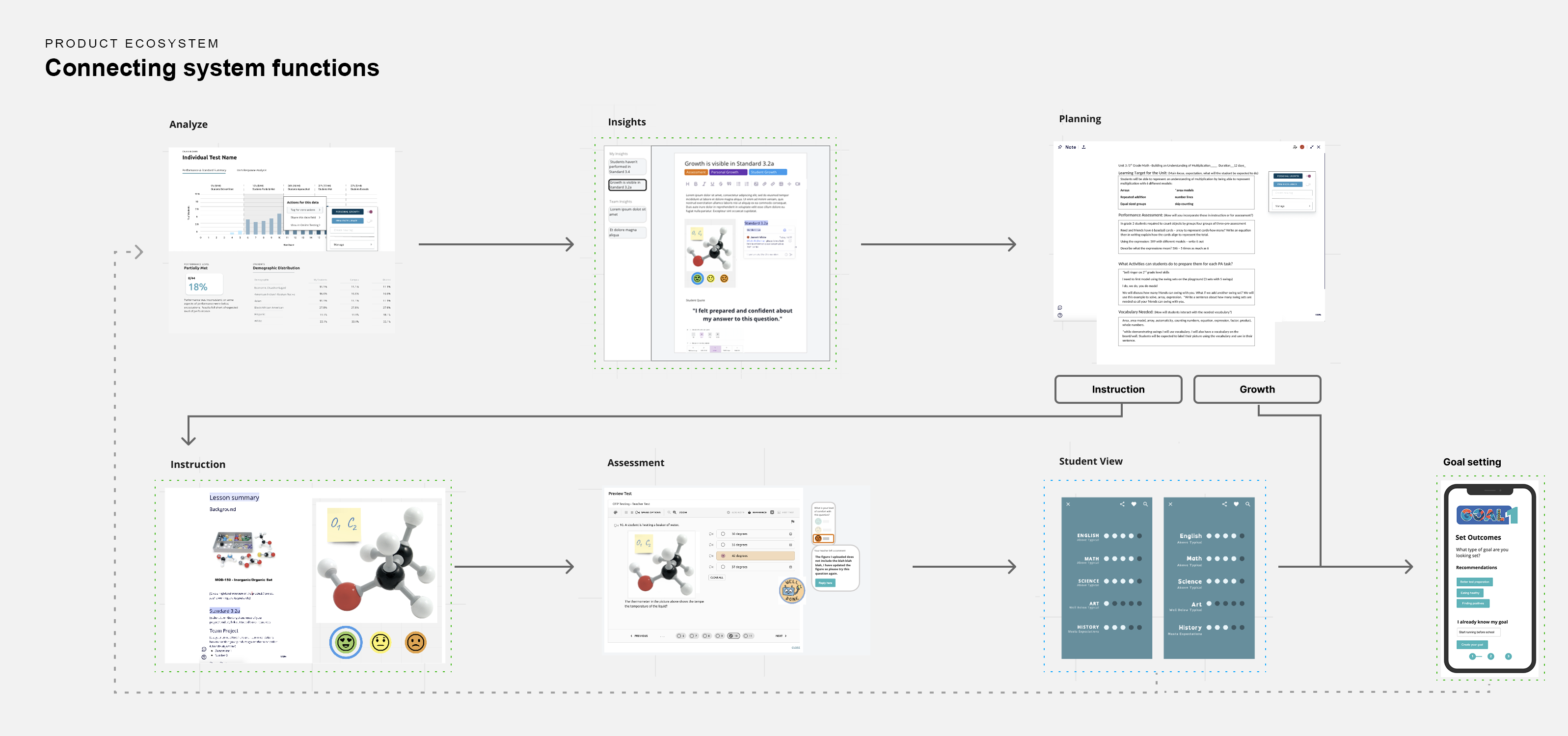
Unified Information Architecture & System Patterns
Situation
There was an outdated system with 3 generations of technology dating back 18 years. This created strain on usability and an opportunity to normalize experiences.
Tasks
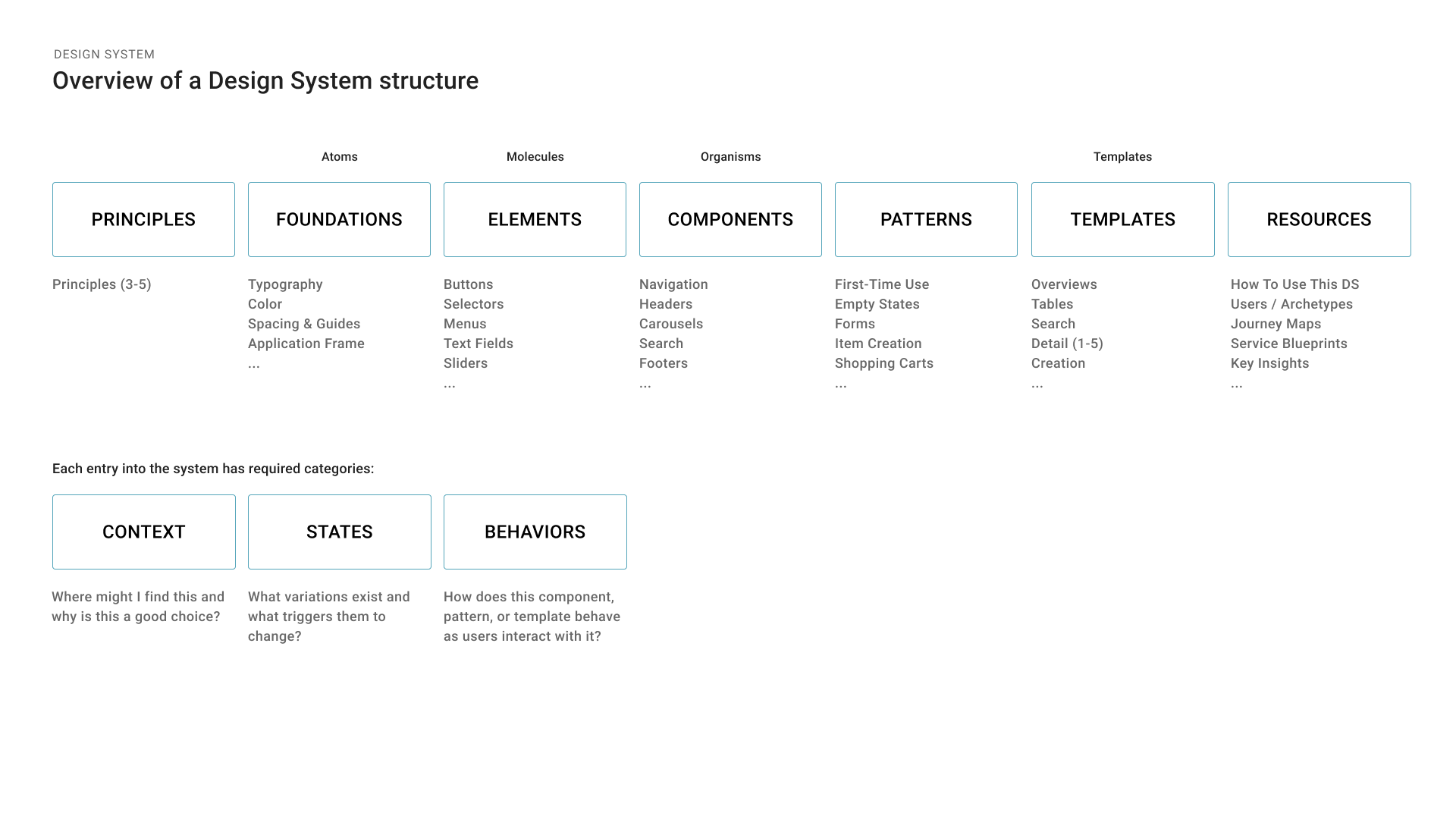
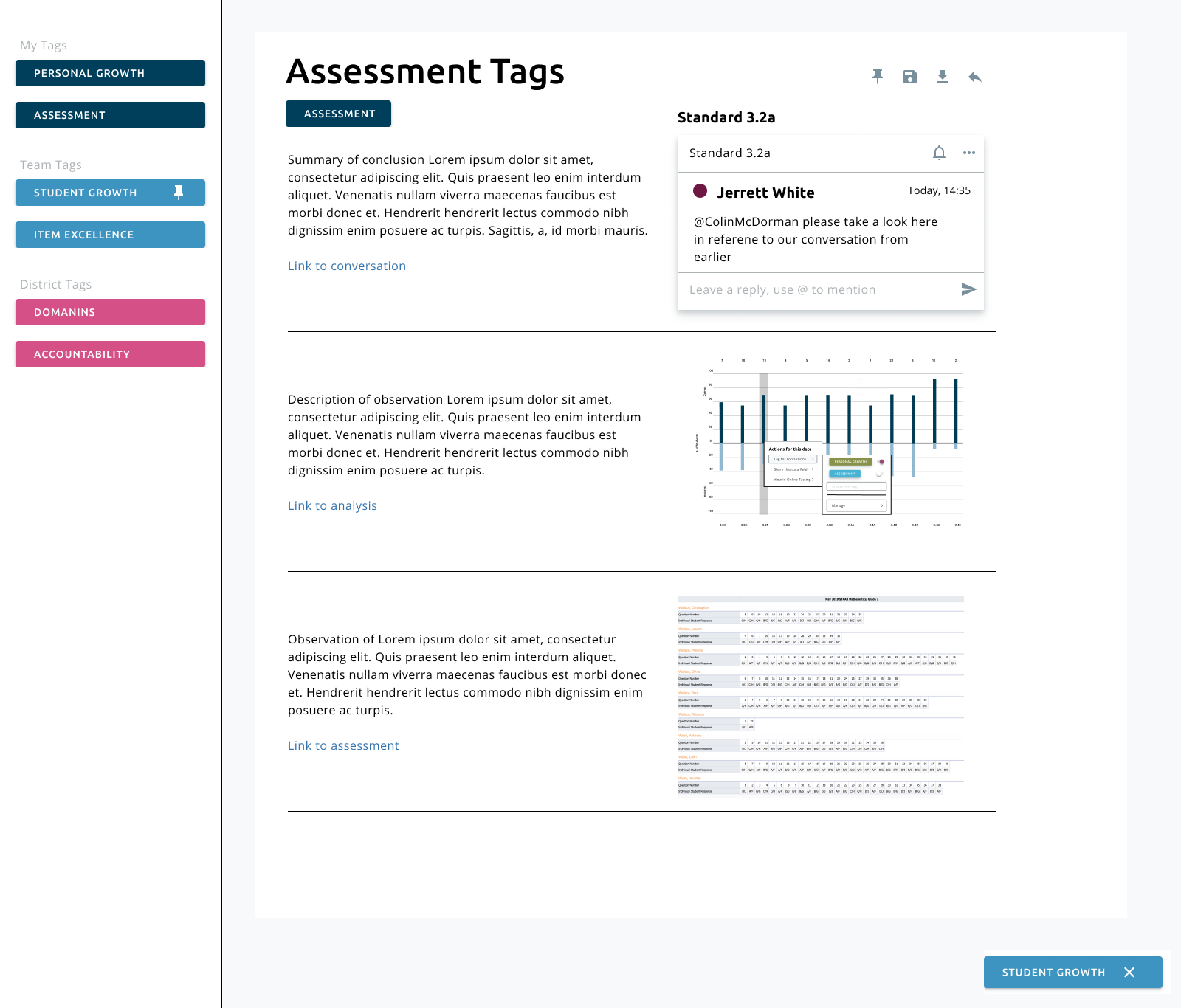
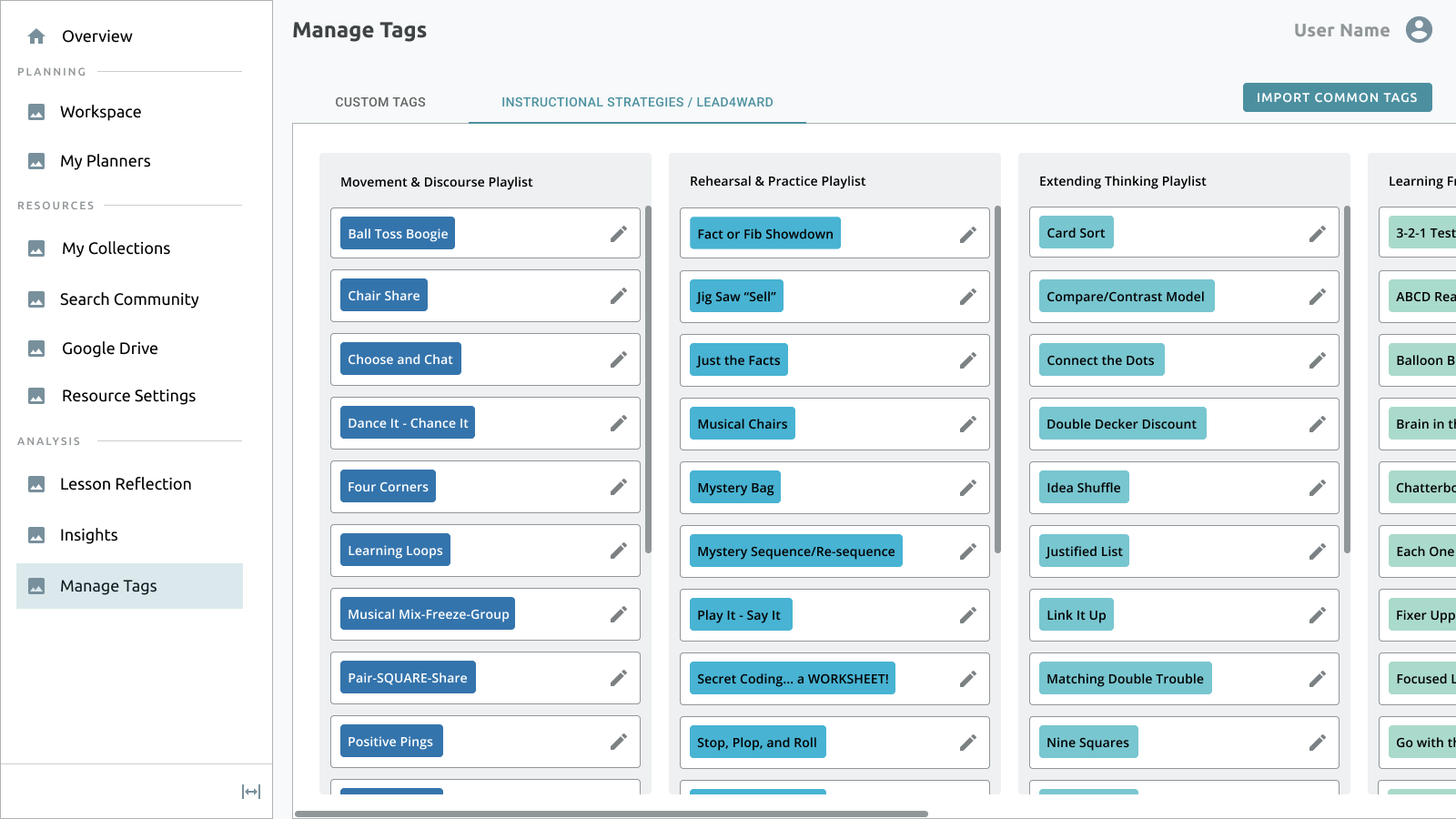
- Create a unified system that established shared information architecture and interaction patterns across 3-5 discrete products.
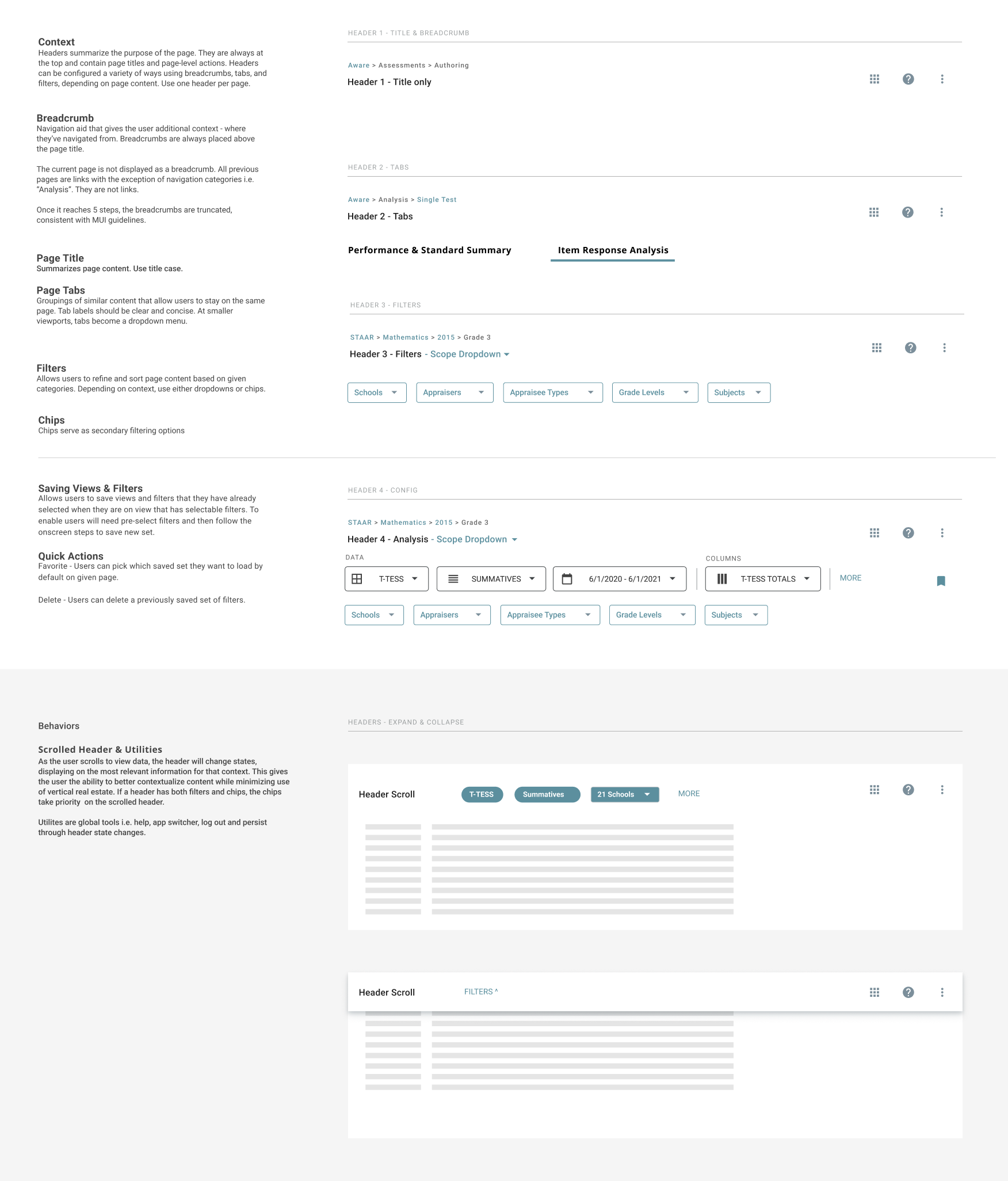
- Define page layouts and configurations along with application framework layering.
Actions
- Modeled current and future states of info arch.
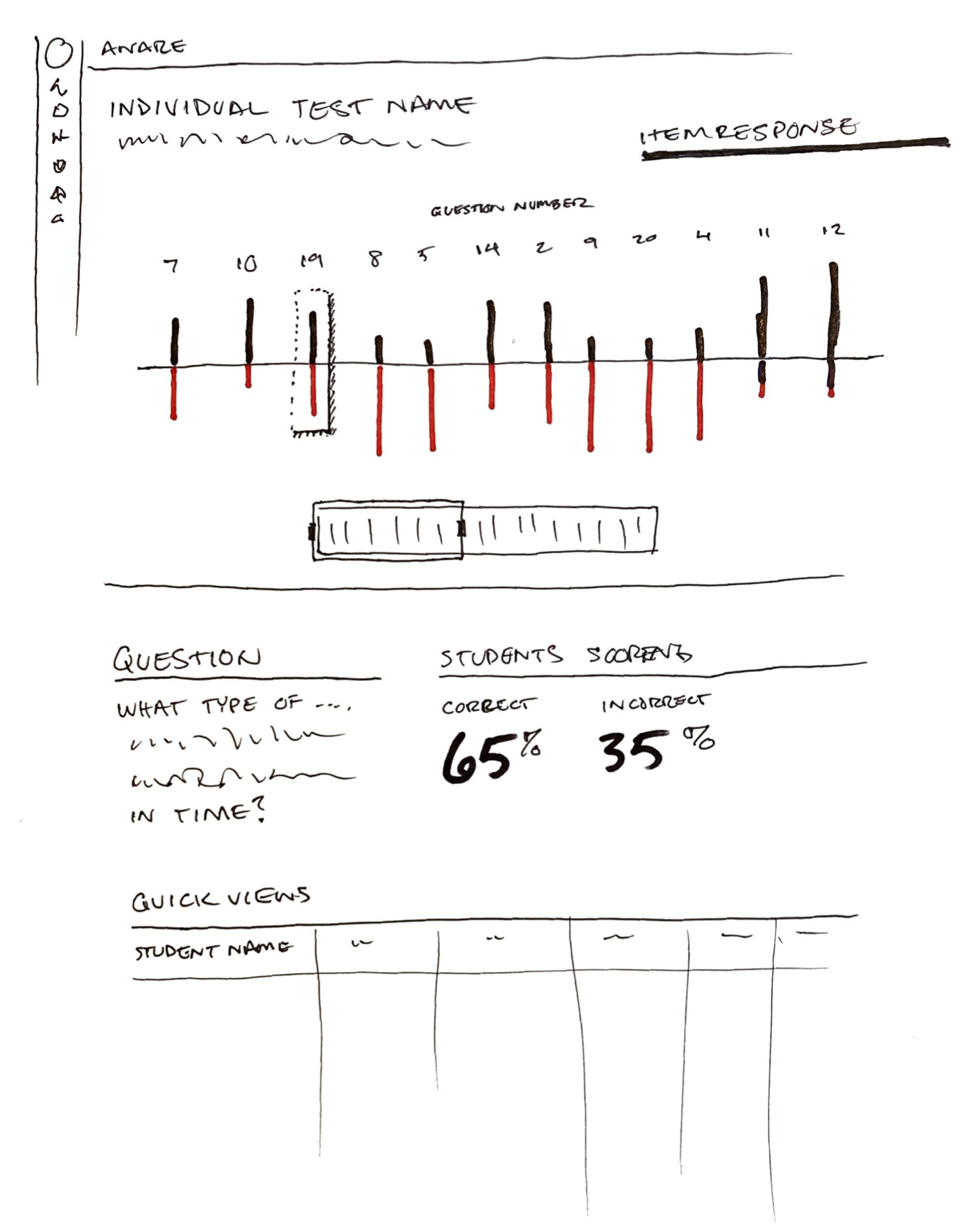
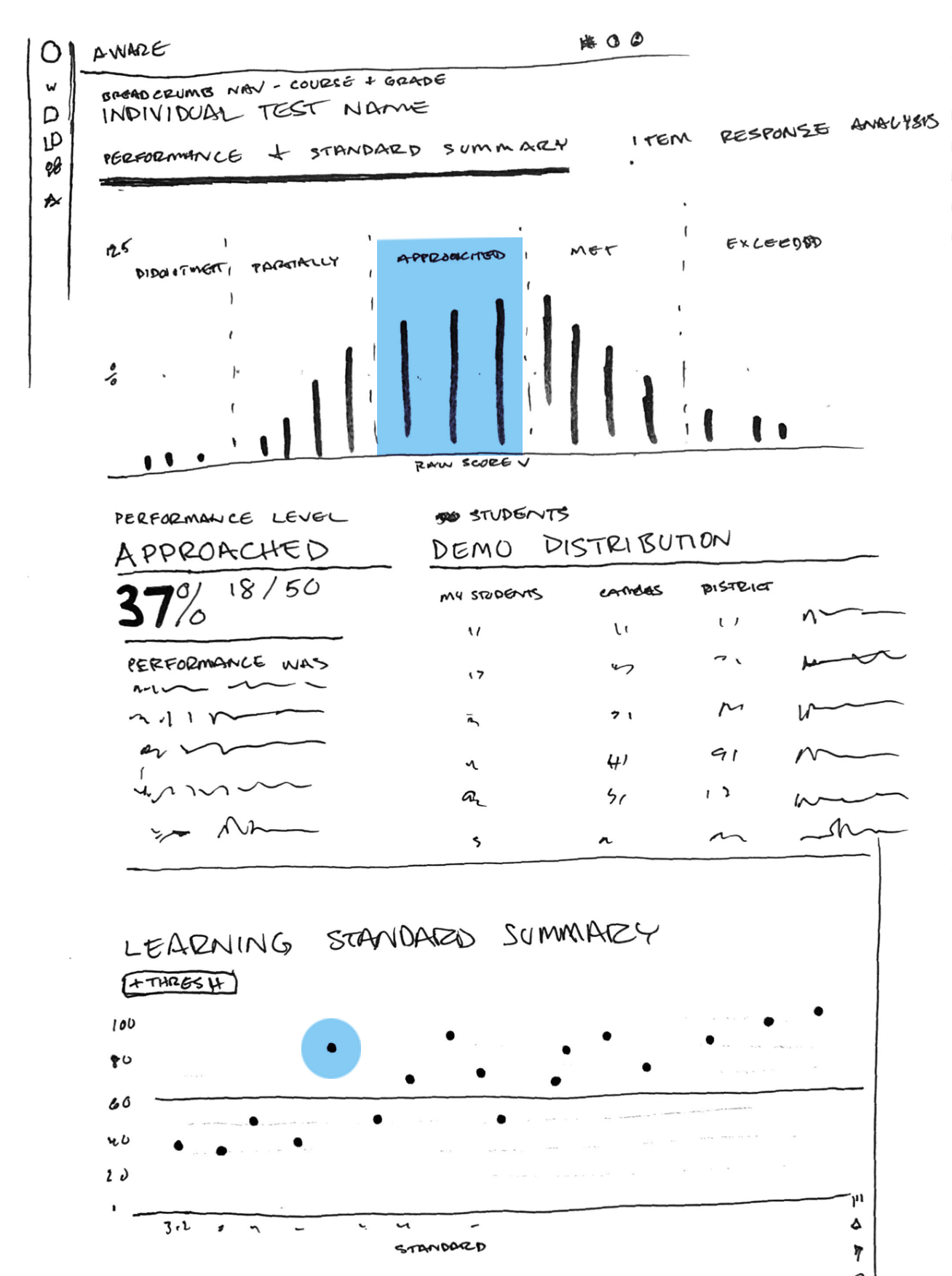
- Designed new pages that allowed users to maneuver through system entries more easily by introducing overview pages and table views that didn’t exist before.
- Employ data configuration and entry filter interactions that helped users find data more easily.
- Test these new patterns.

Leadership
A process was presented to the team for this portion was hosting a series of working sessions that allowed us to chip away at a very large scope of work. We made sure we had a tight collaboration loop with PMs and Engineers to attend creation workshops as well as progress reviews. We had standing time on Friday morning to create or review, and had design-only sessions earlier in the week leading up to that.

User Testing
We tested our new designs with current users and non-users, based on 3 key flows people go through when accessing a test. Users successfully completed our tasks, though they did struggle with discoverability for a couple of interactions, and we were able to scan our qualitative feedback to find out why. Design updates were made to resolve this issue.




RESULTS
- Successfull feedback in our usability studies.
- 50% take rate within the first 3 months of releasing, which toppled our 20% target.
Research & Concept Development for a Planning App
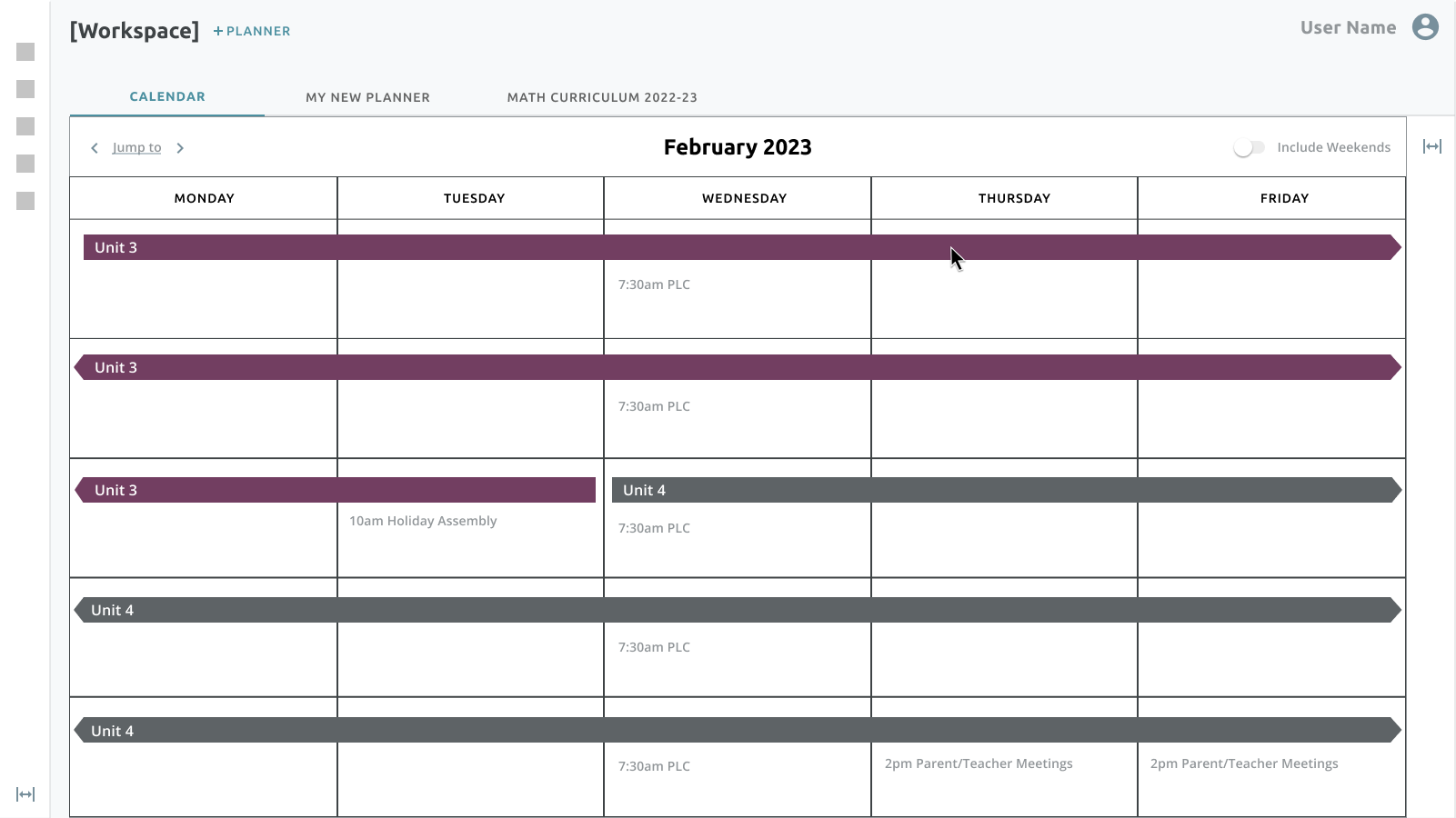
A Curriculum and Planning application was in need for a new experience and ground-up thinking.
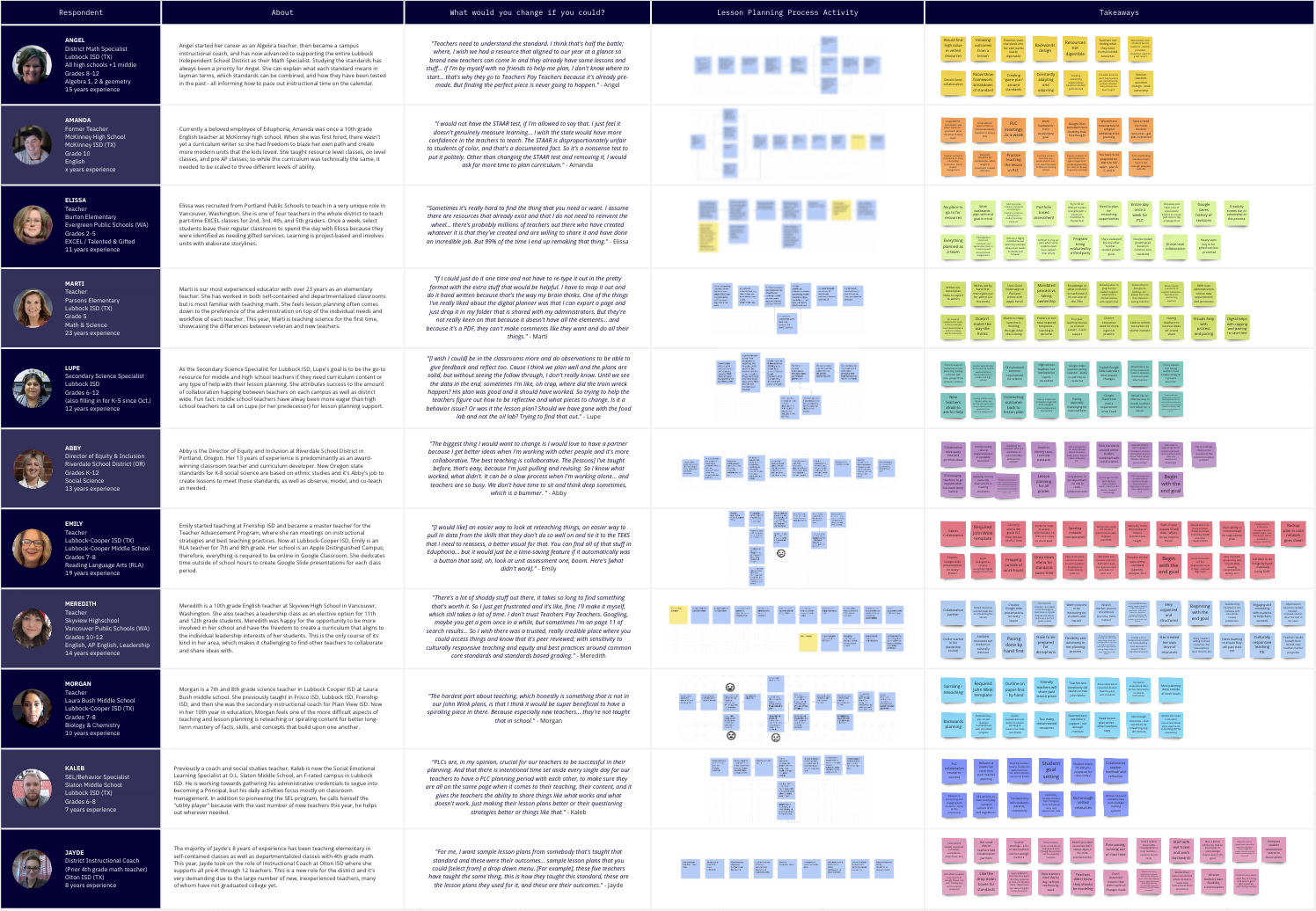
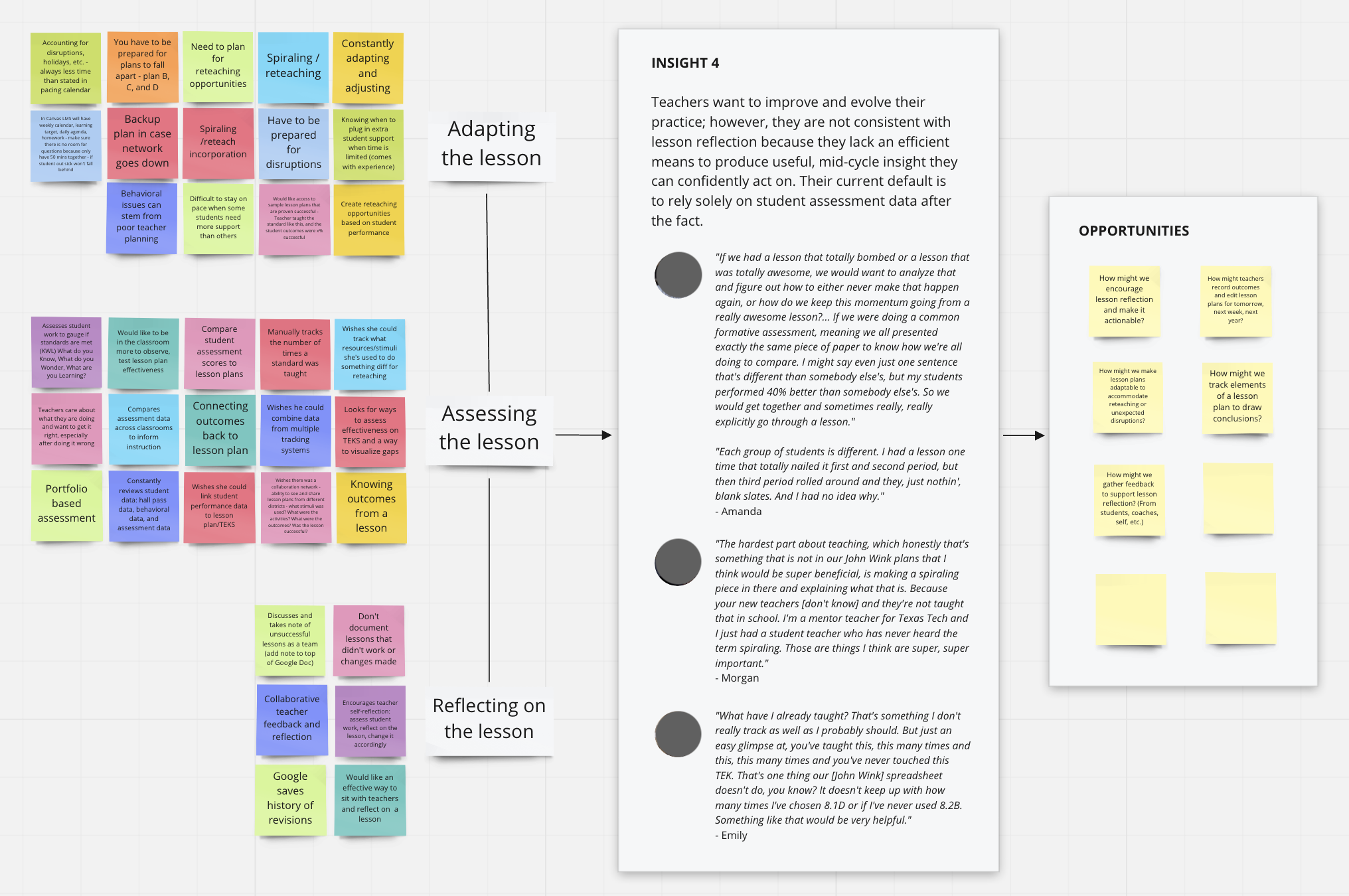
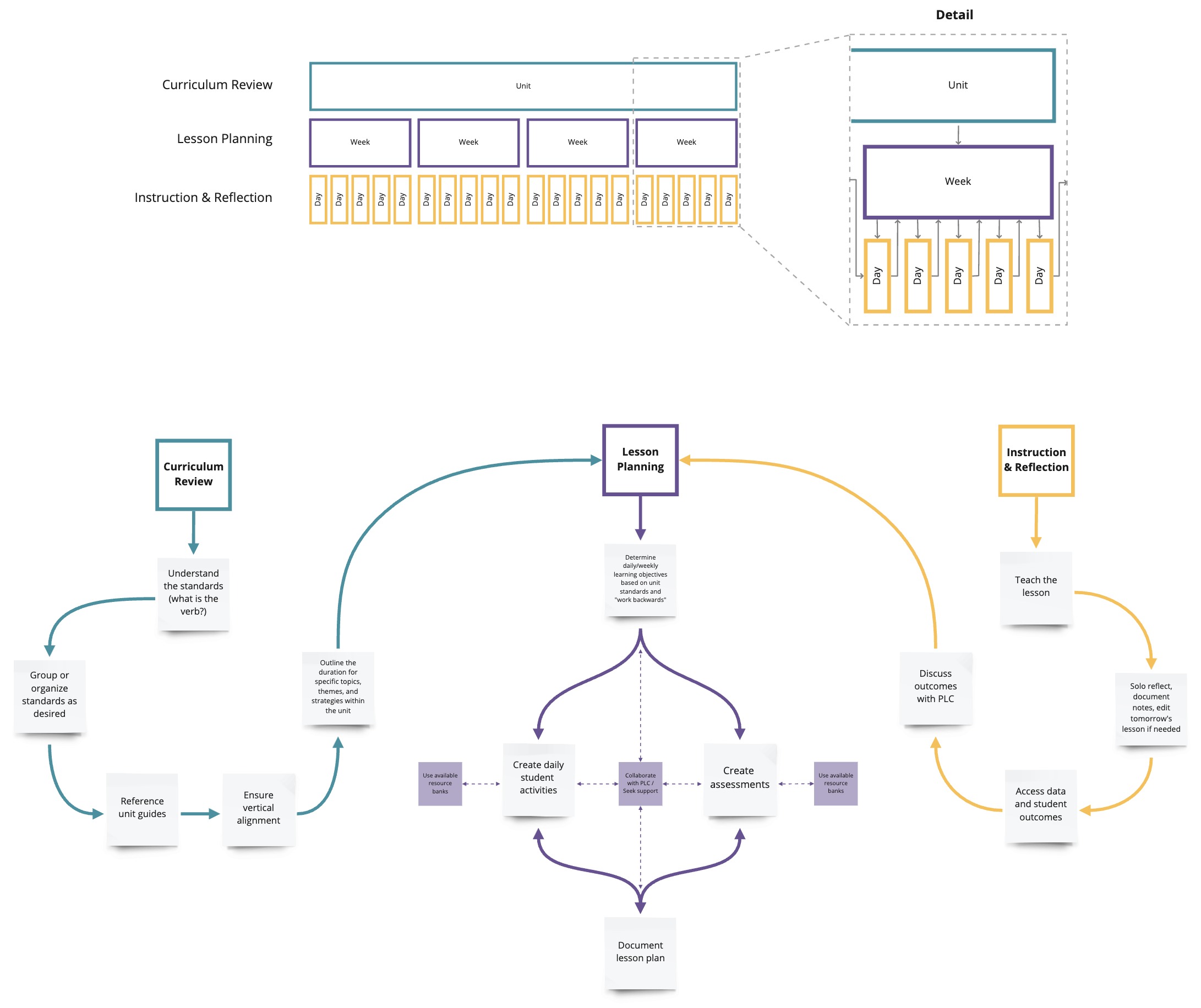
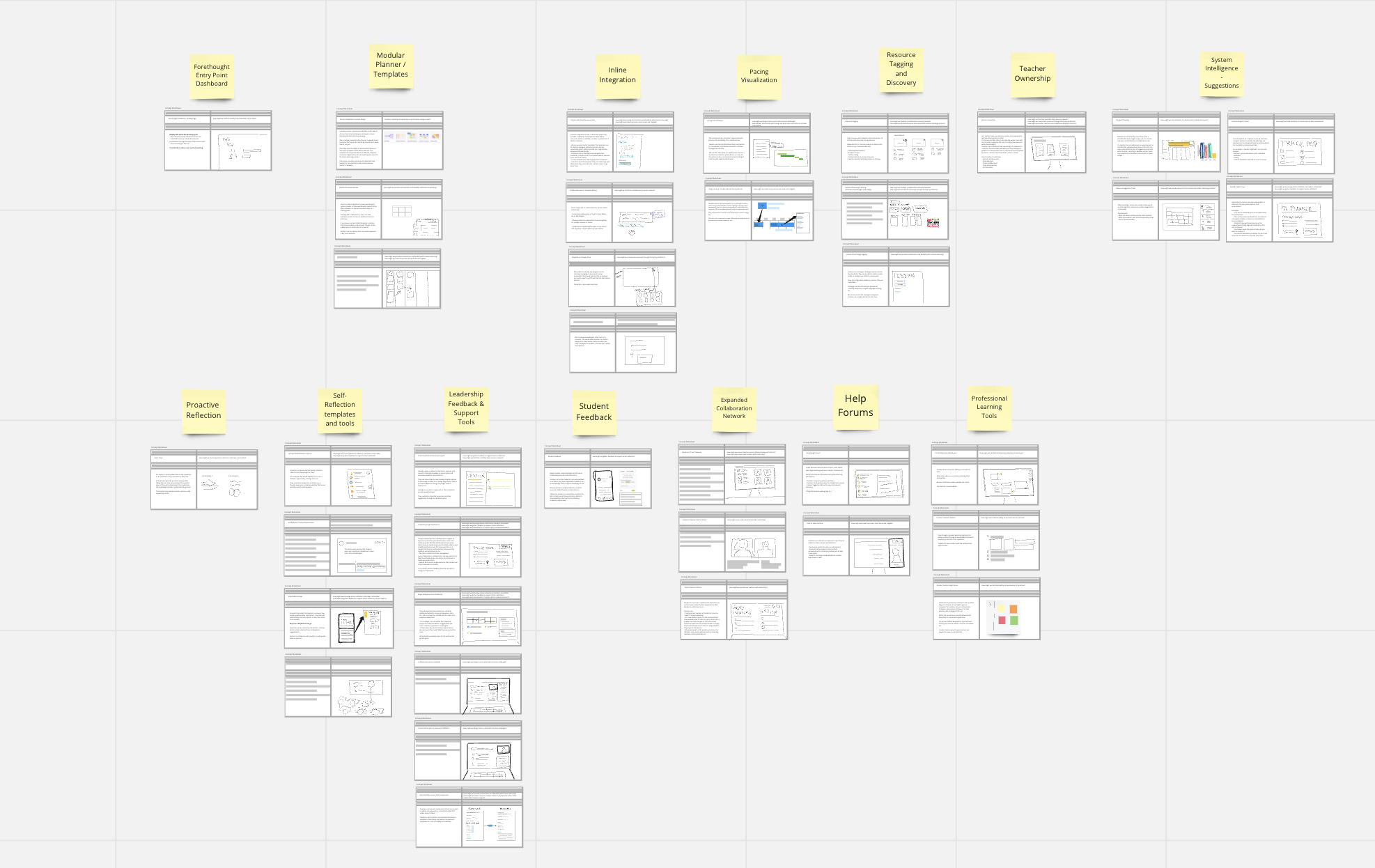
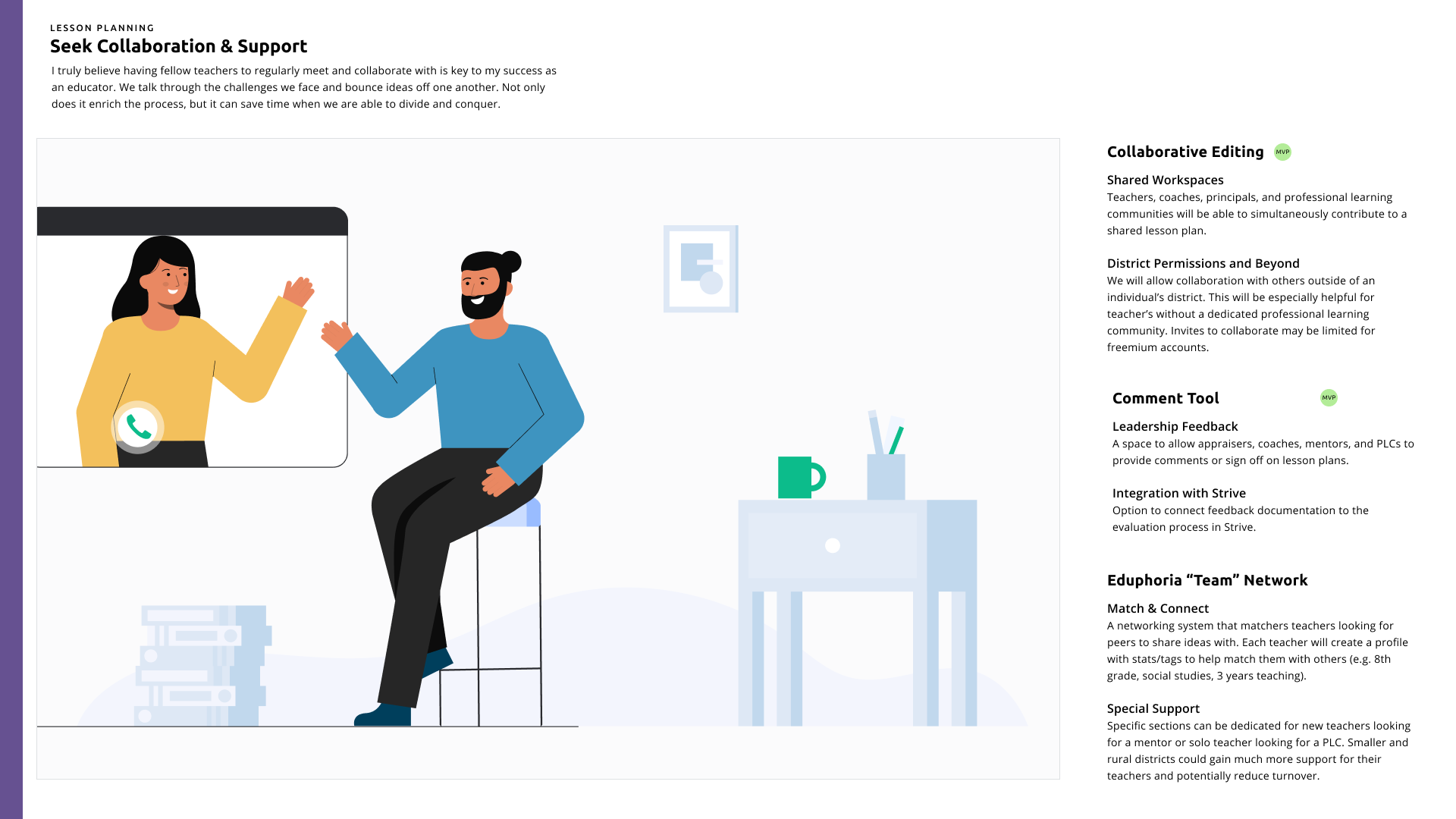
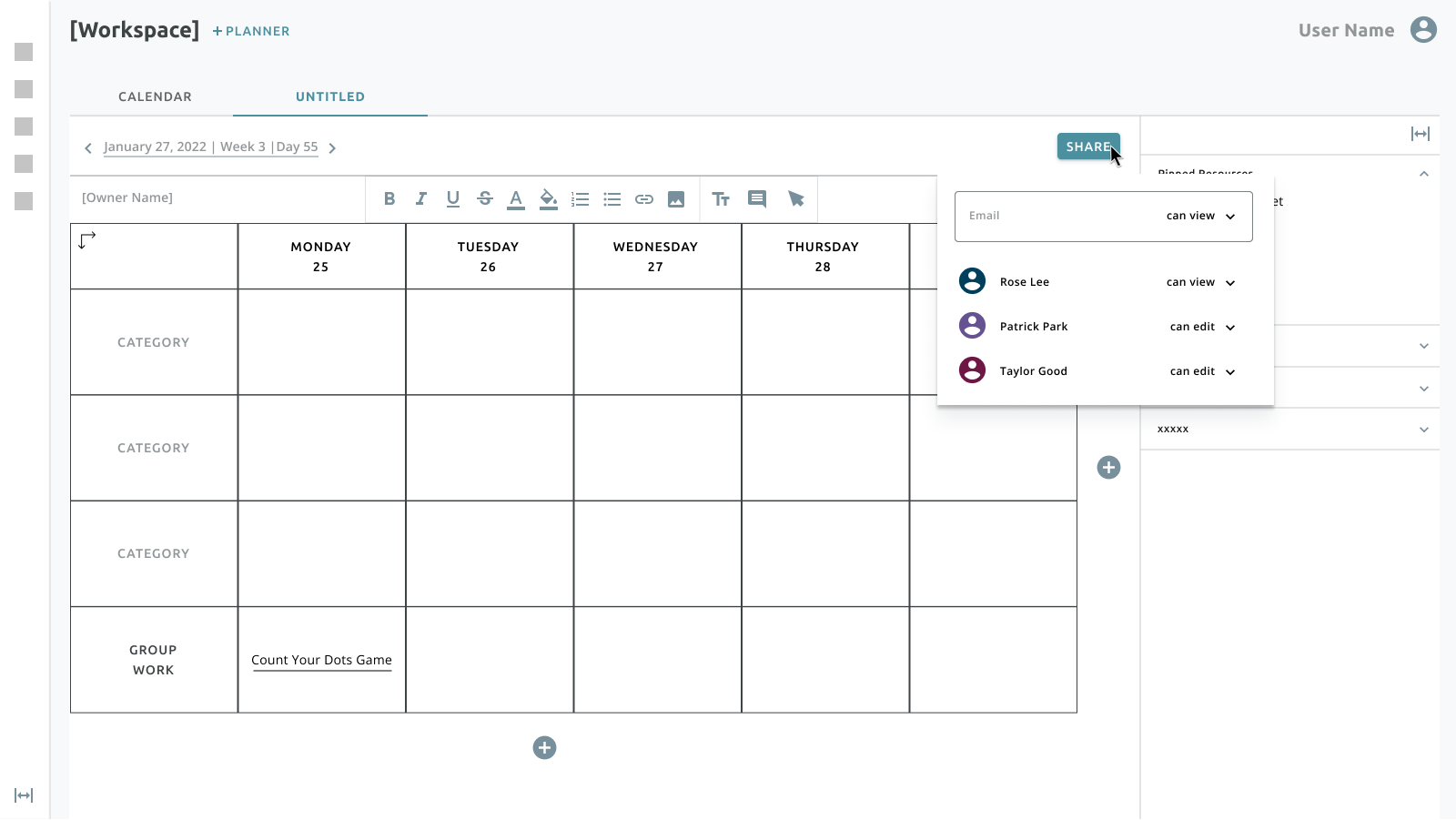
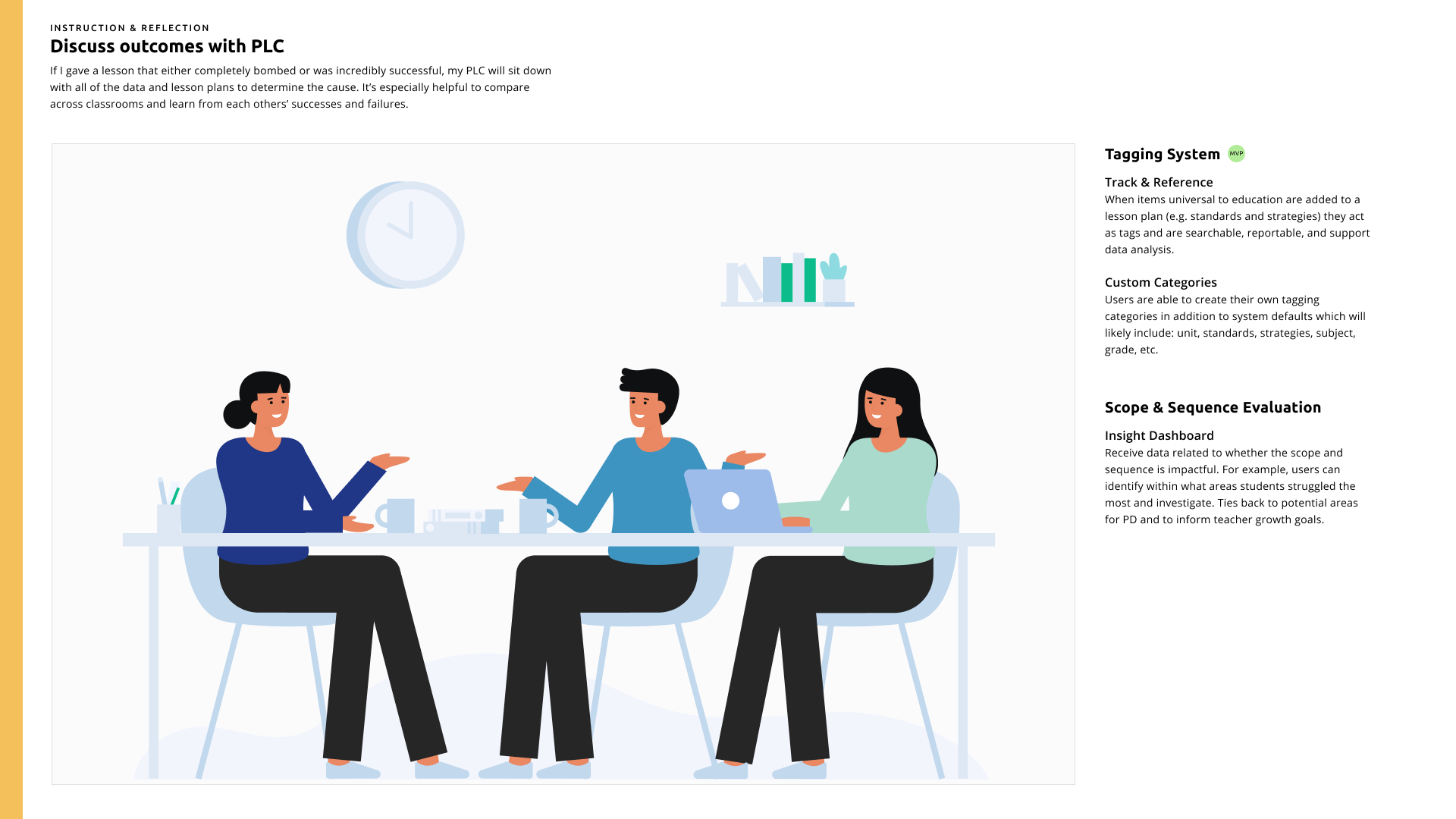
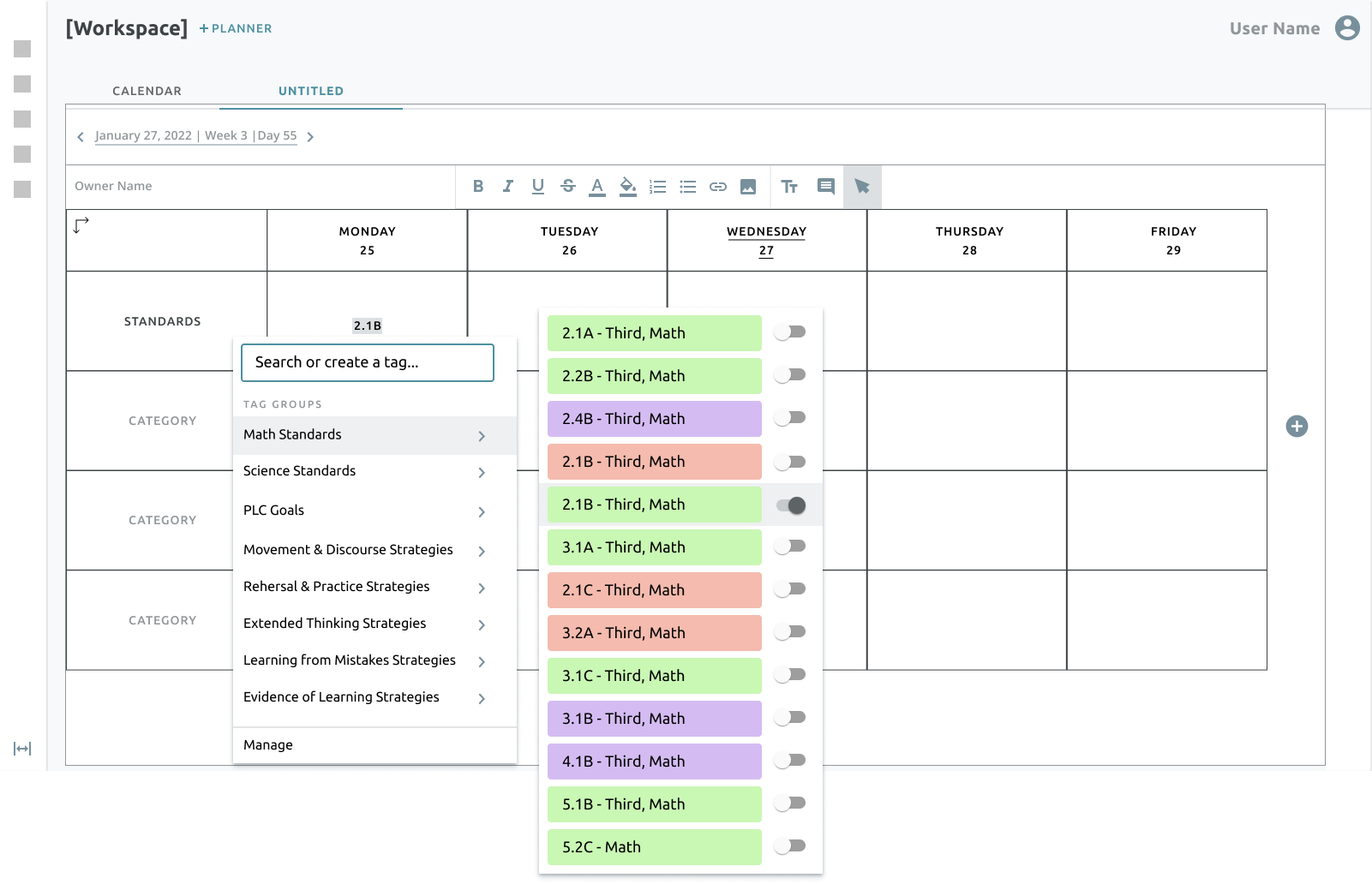
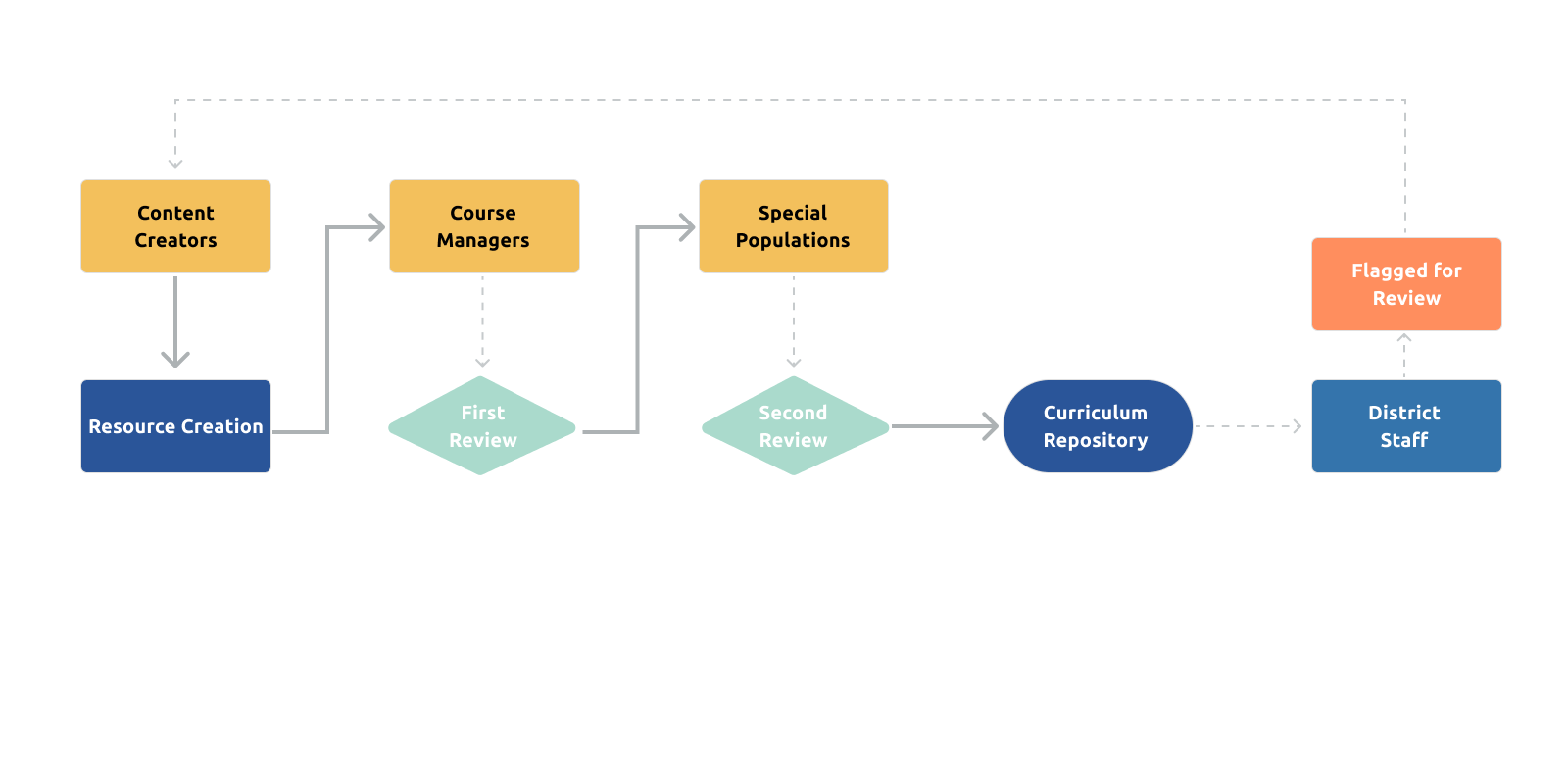
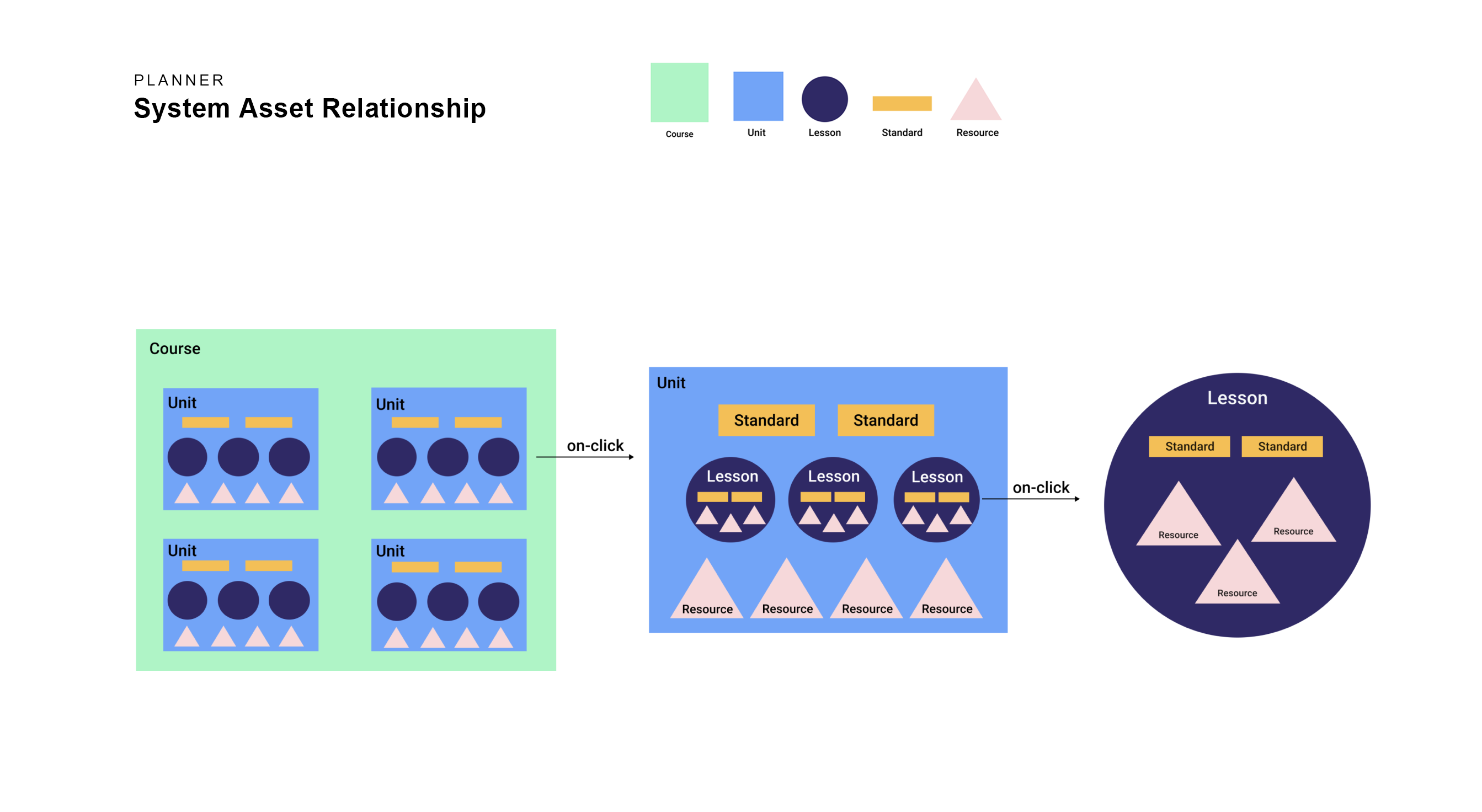
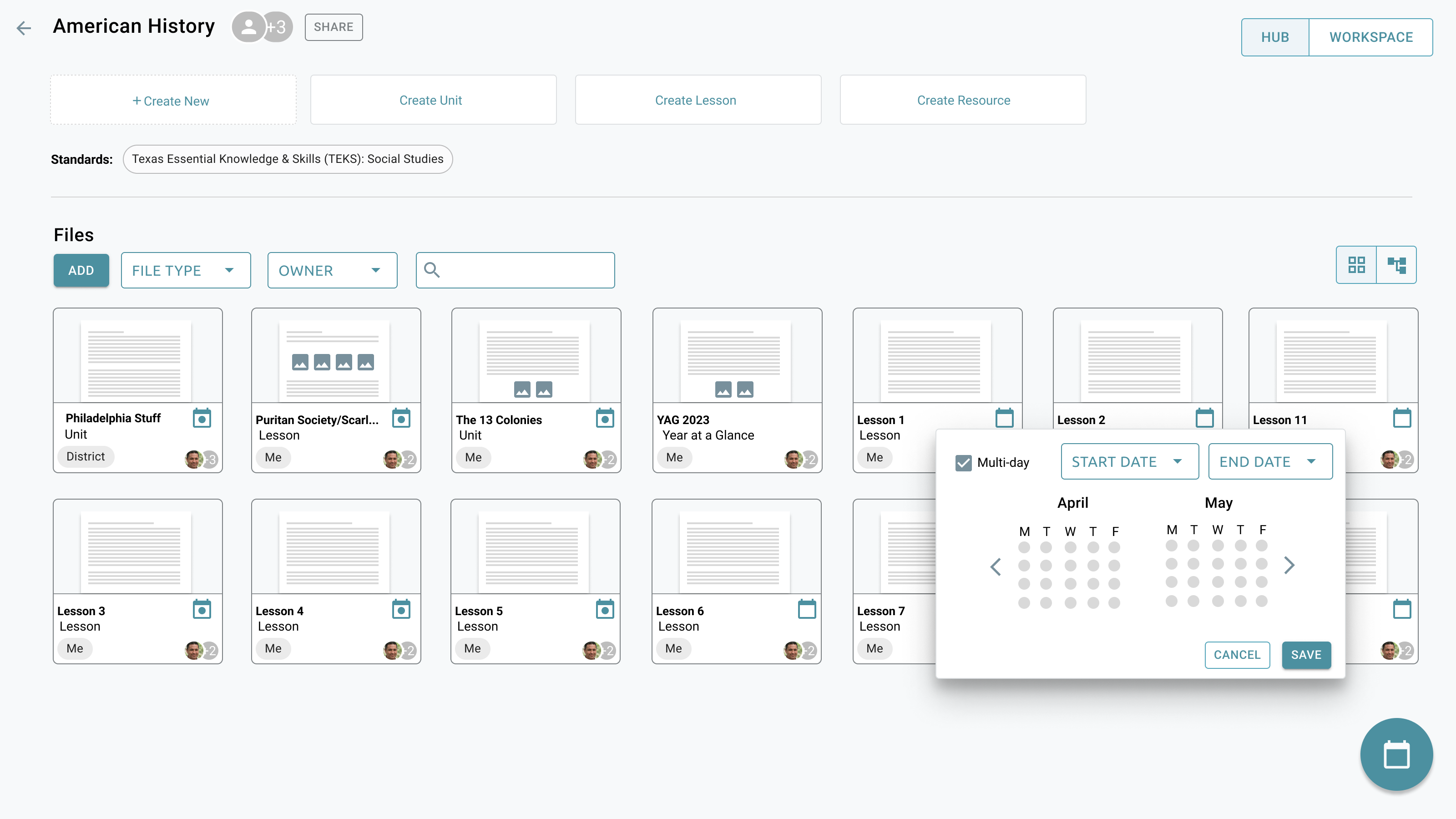
Three areas in the journey to identify Key Moments in the experience. Below is 1 example from each area, which had 3-5 key moments in each area of focus.
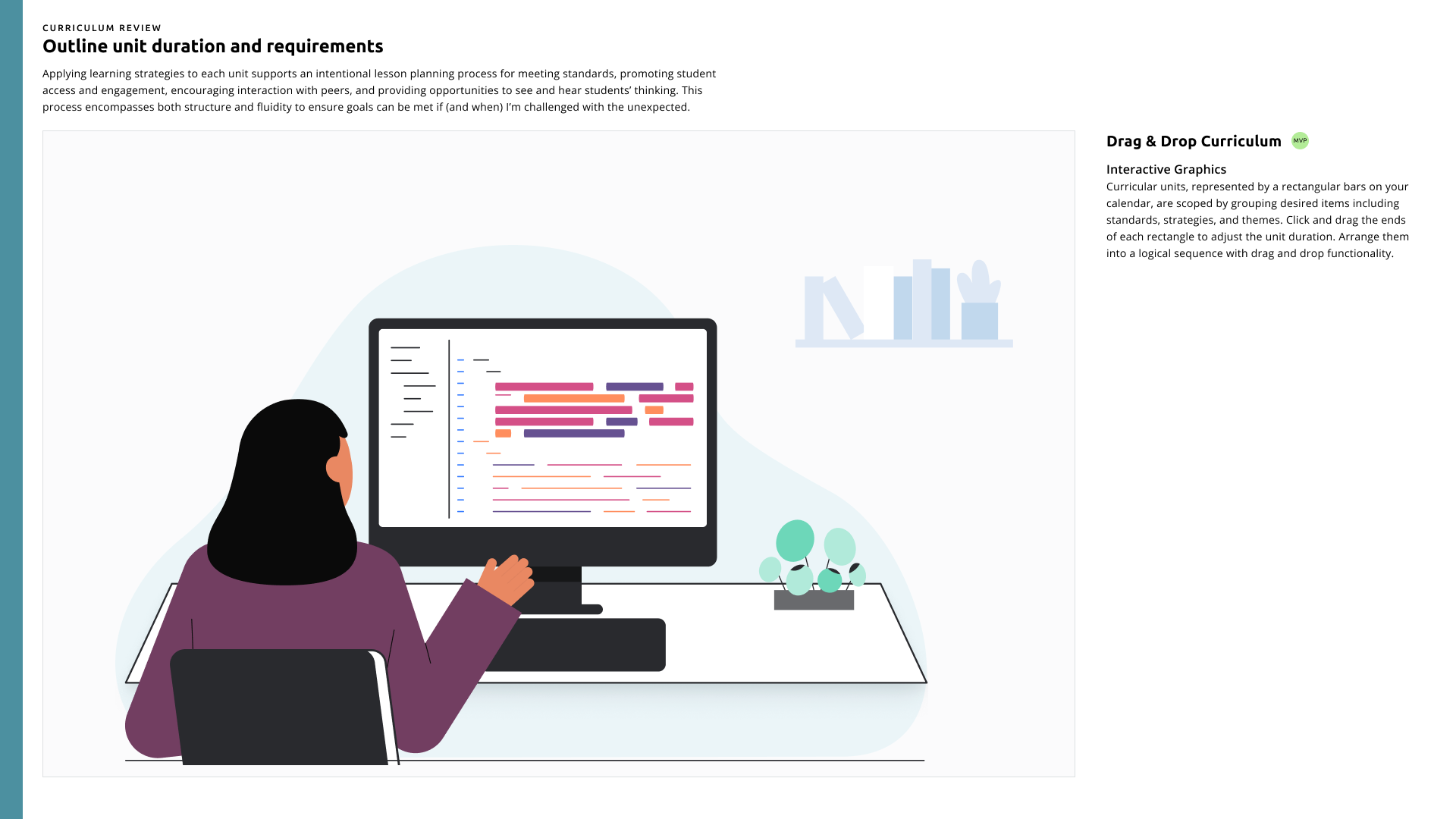
Leadership
There are many ways to build a planning document, and this was leading to decision paralysis within the organization.
I asked the teams to break down the larger problem into smaller ones, and we chose to take a look at the component level of a single calendar day, and the content drives its dynamic nature. I showed examples of design approaches on “the anatomy of ___” diagram modeling. This helped engineers and PMs have a better understanding of system entities.
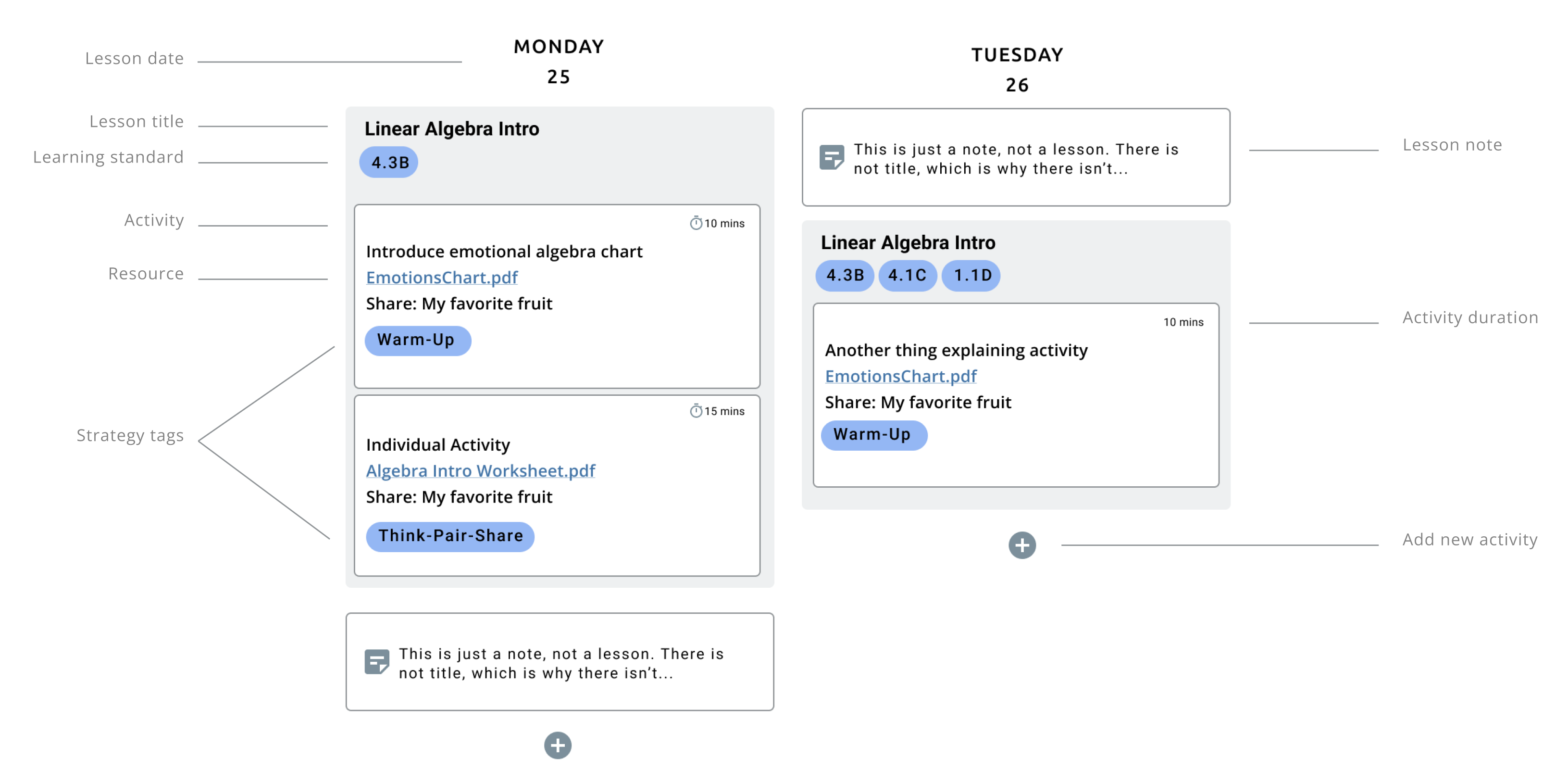
Normalized, yet flexible
The experience needed to remain very flexible, so strict definitions of system entries were important, though the placement of them was up to the user.
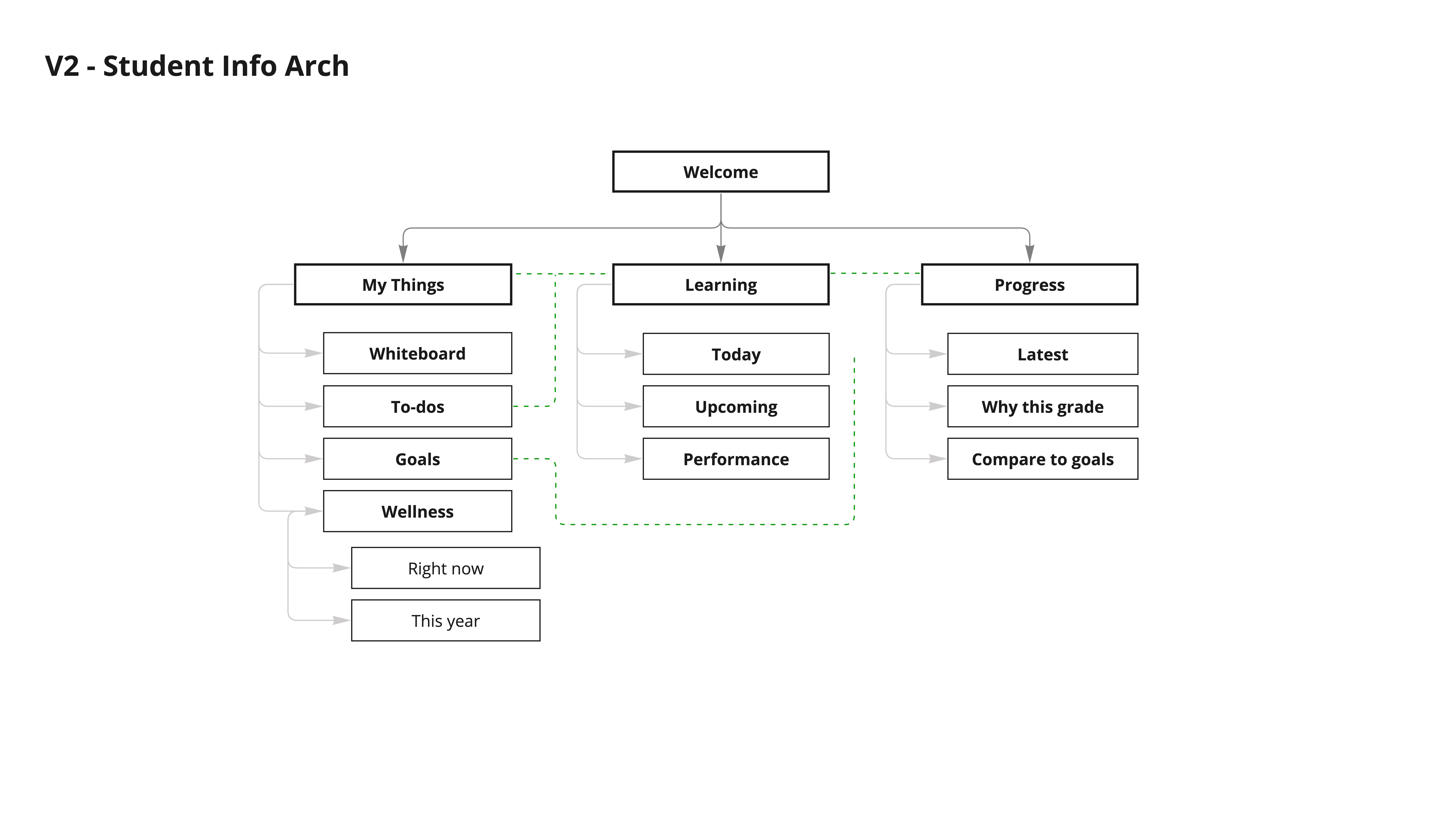
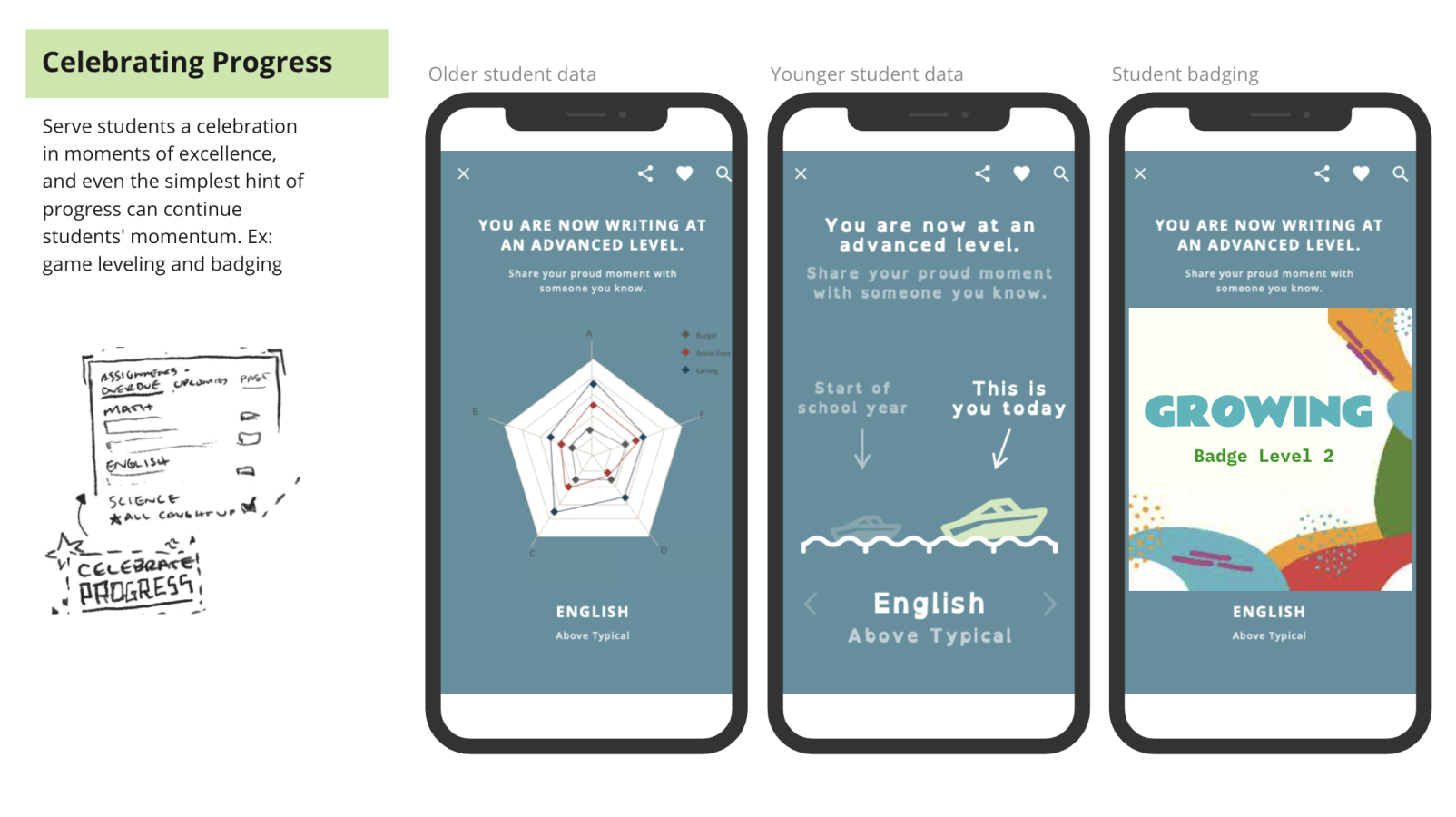
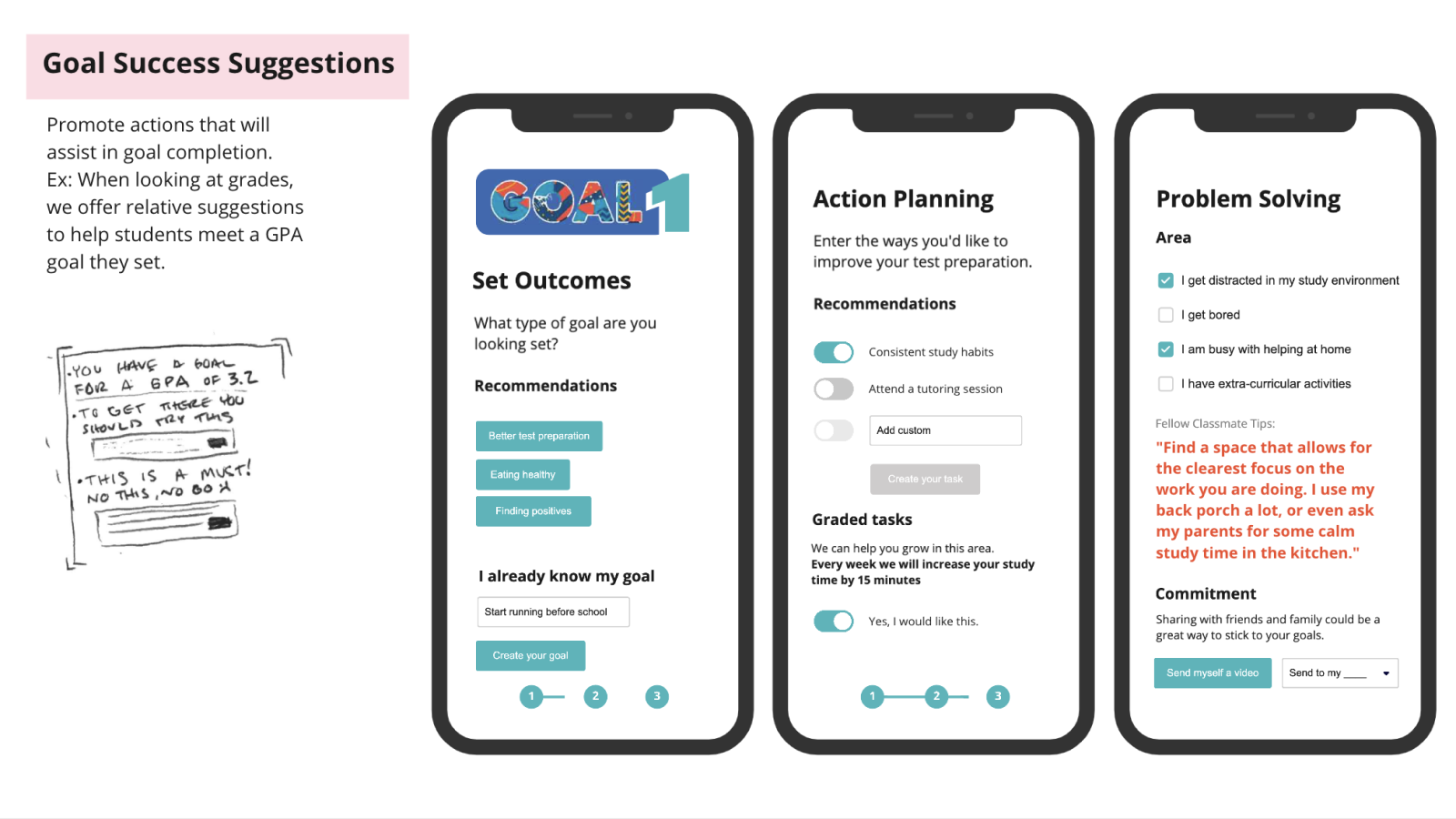
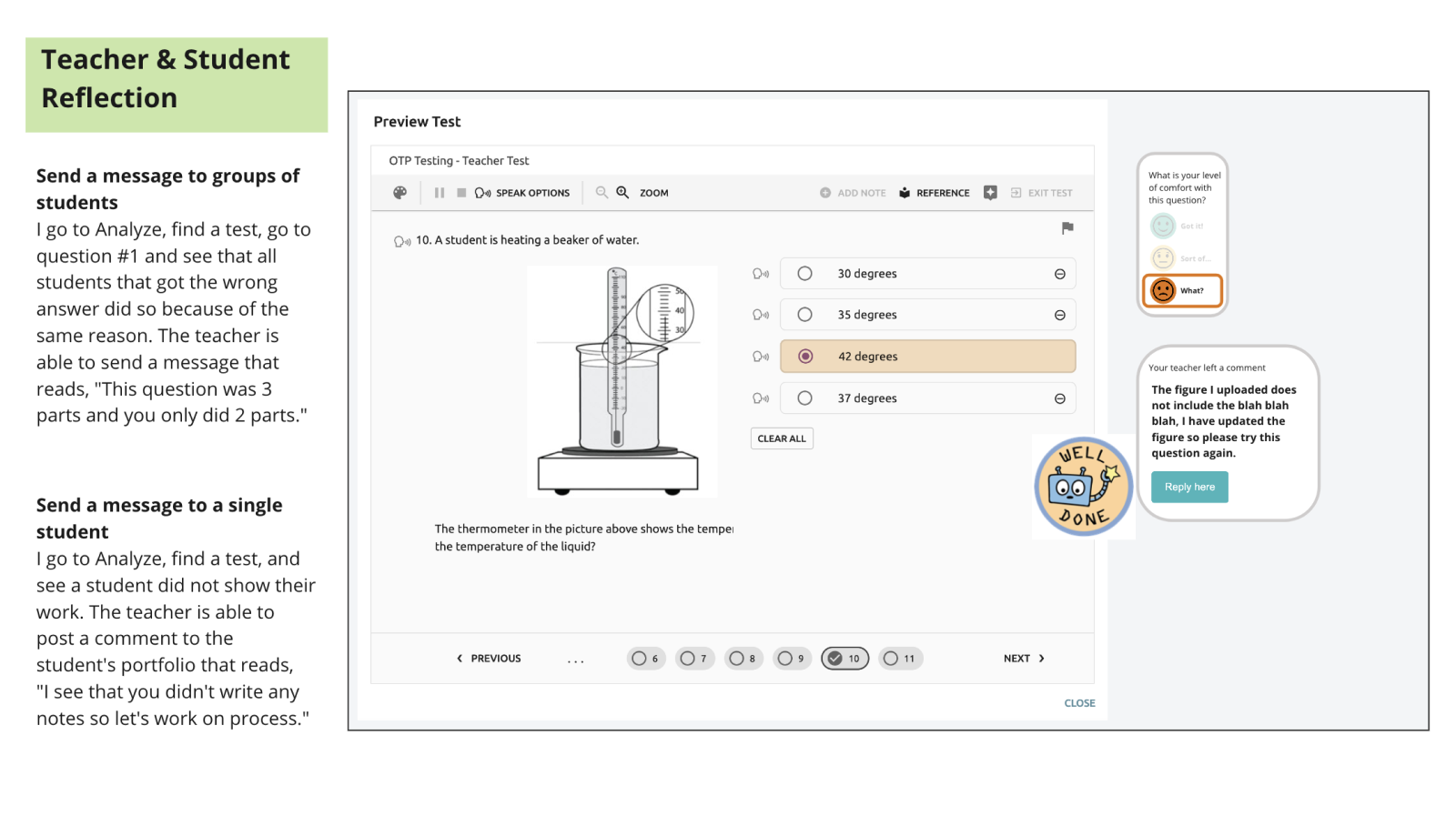
Creating a Student Experience
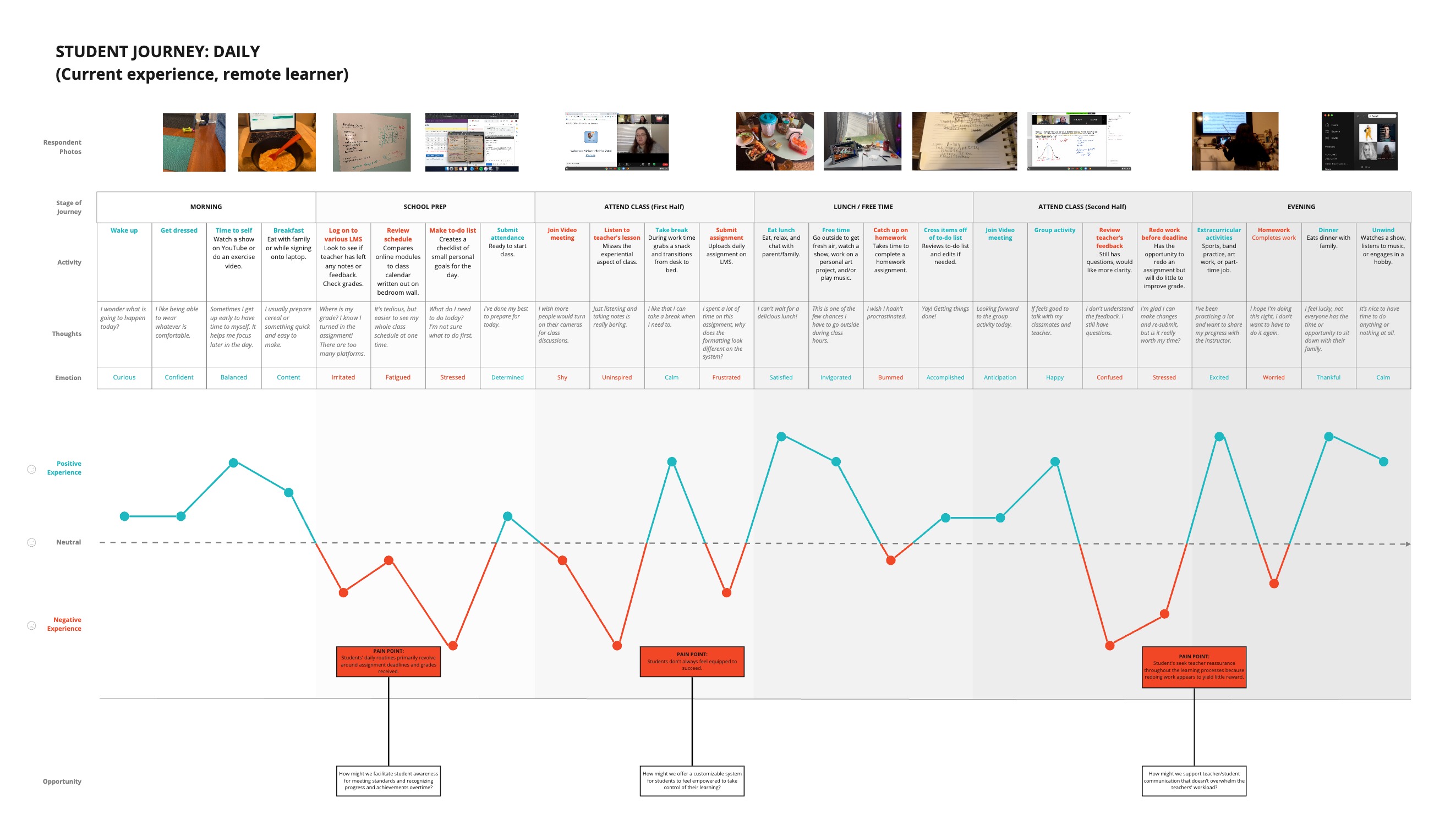
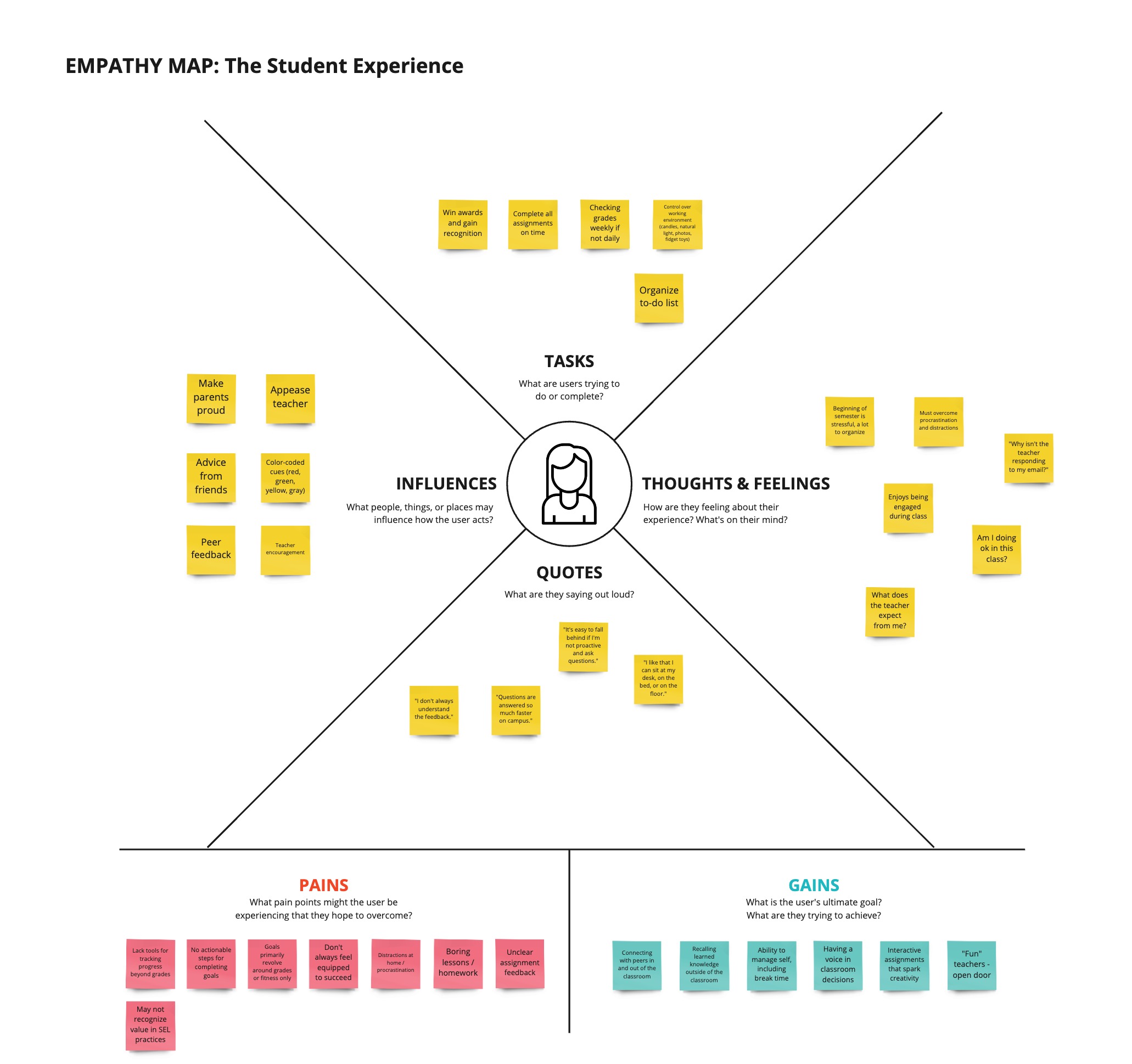
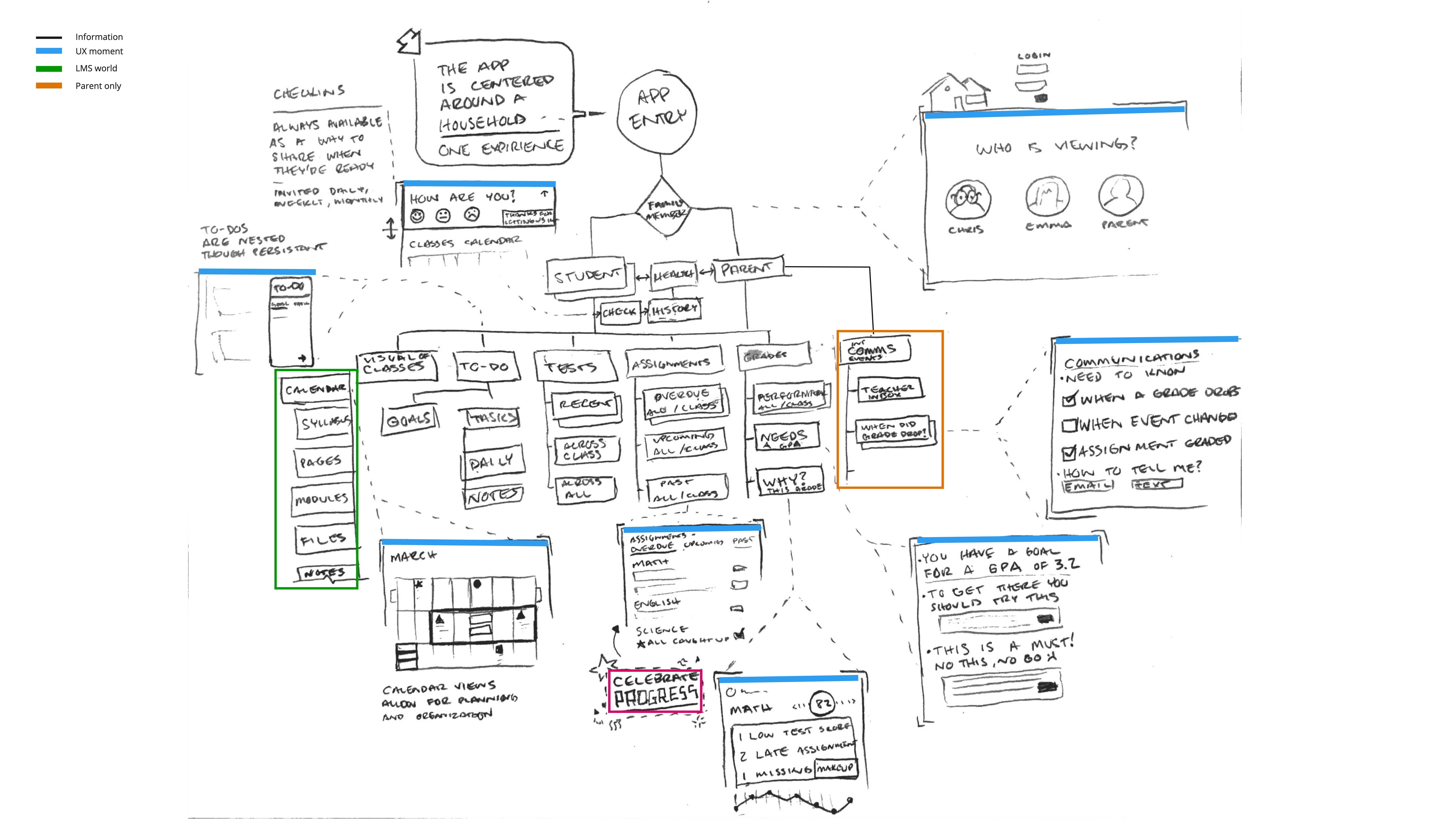
Simplifying a Flow
We found it was taking users six to seven clicks to proctor a test and wanted to shorten this time. They had already put all the hard work in creating the test, all they had to do was open it up to students. We believed this could be completed in three clicks, and we made it happen.
The evaluation is oriented around the user through these three dimensions.
Completion rates Some tasks are to be completed in one instance, like Students taking Online Tests, though other tasks are to be completed over time, like Teachers submitting Evaluation Goals. We also look at key features of functions like Text to Speech usage or Adding New Goals.
Utilization of key functions (events) For each goal we are able to have four related goals. For Teacher - Test Editing & Proctoring we look at users that Add a Rubric, Add from Item Bank, Reorder Questions, and finally Proctoring the test that was created along the way. This is currently based on a user session rather than a specific test entity, though we hope to be able to derive this data as being scoped to a test.
User flow analysis We take a look at individual users, groups of users, and our collective user base to determine actual behavior in our system. We want to understand where users are coming from when accessing particular data, we may assist them better in this. We also want to understand the number of steps users are taking to complete a task
A district view of teachers proctoring tests. Both models below represent page loads, there can be many interactions that happen with each of these pages.
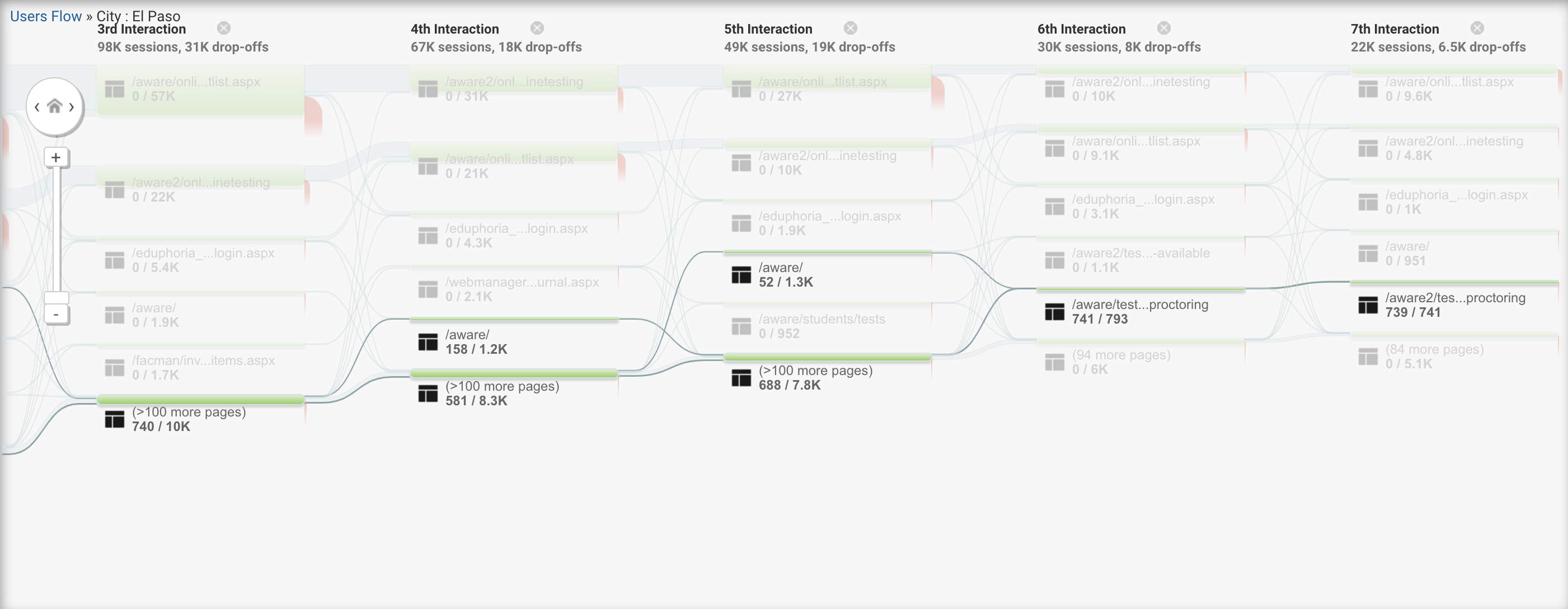
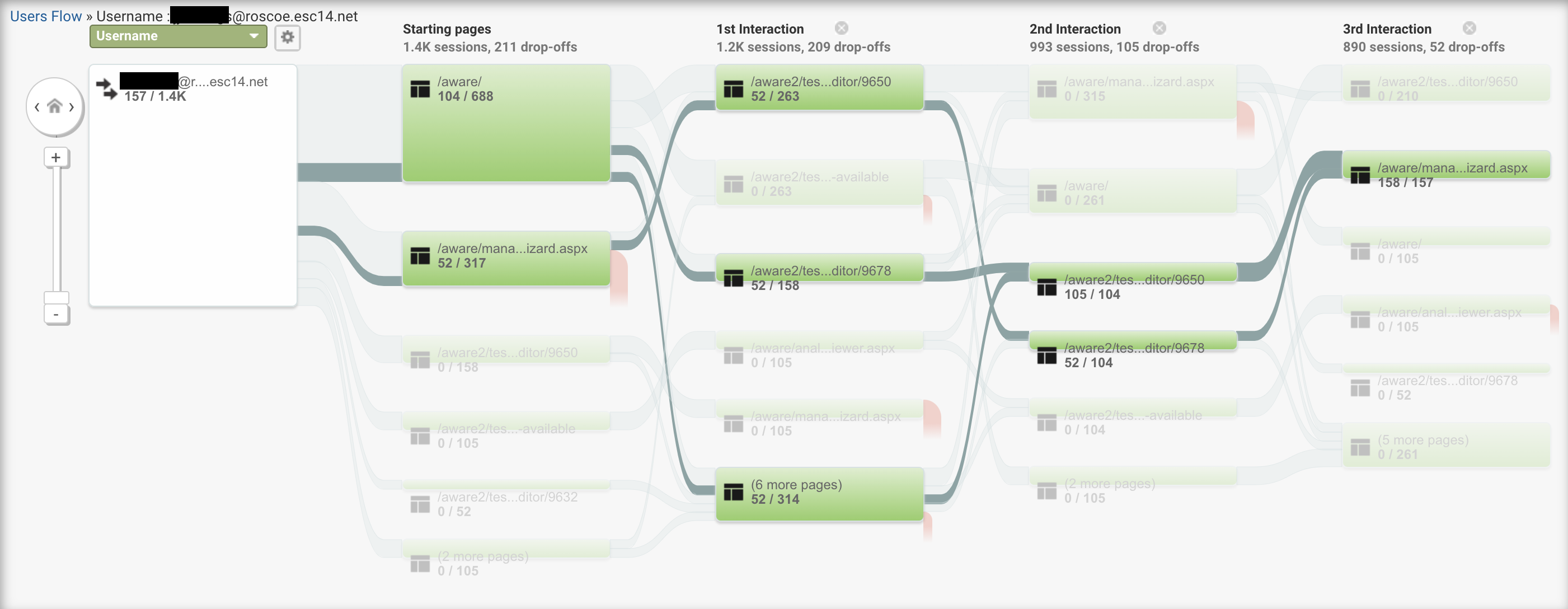
How might we make this faster to accomplish?
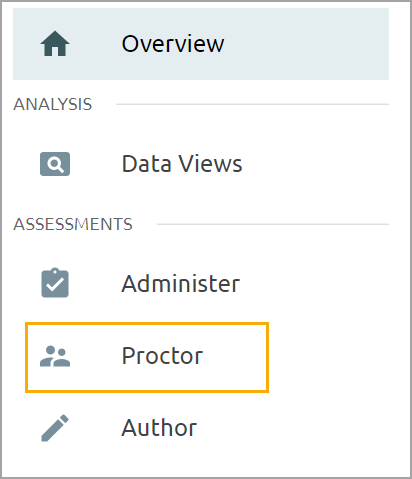
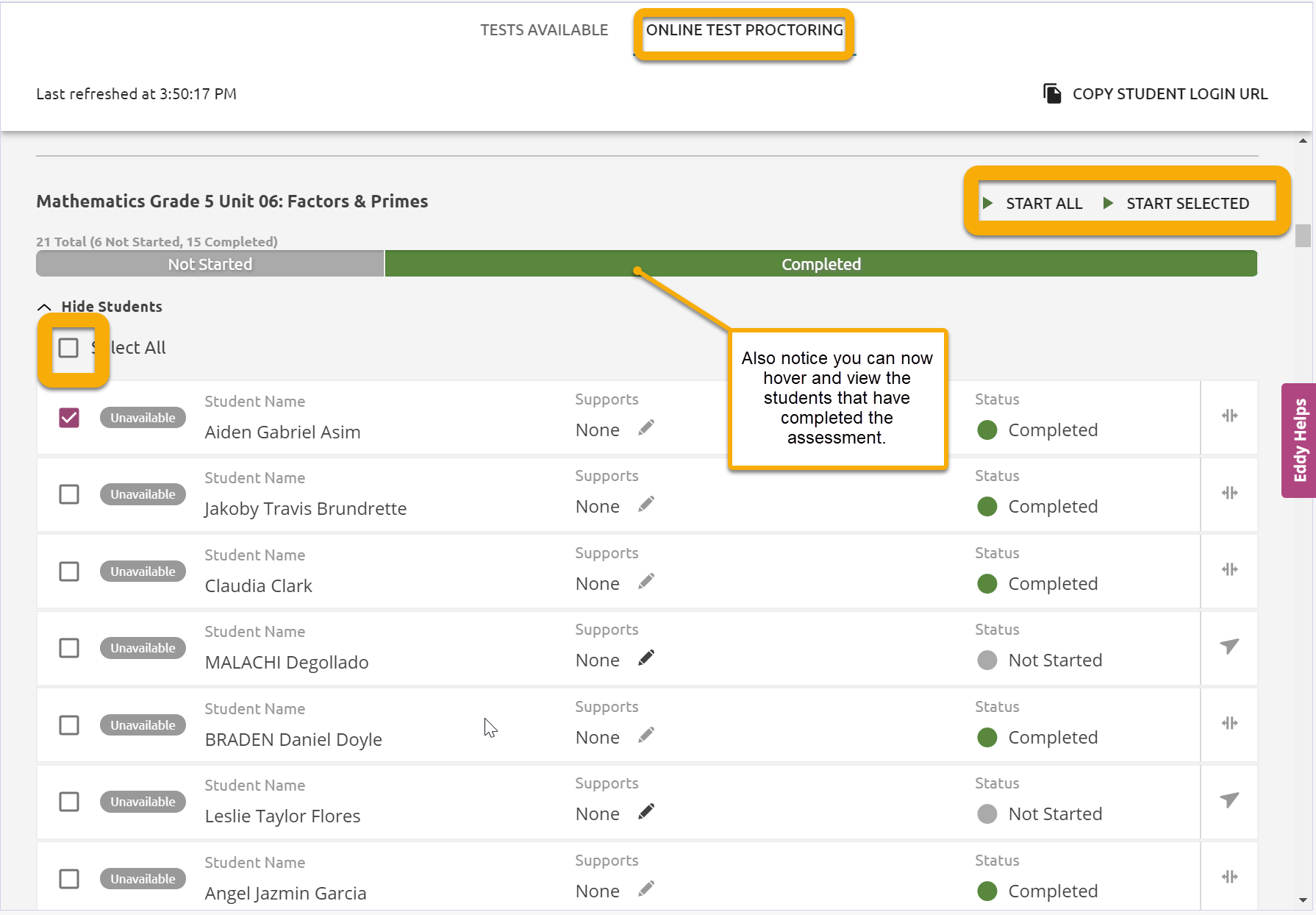
The solution was to create a short list of tests that have a Collection Start Date of today. Bulk action to proctor all of today’s tests, or proctor this class test
Strategic Alignment and Brand Design System
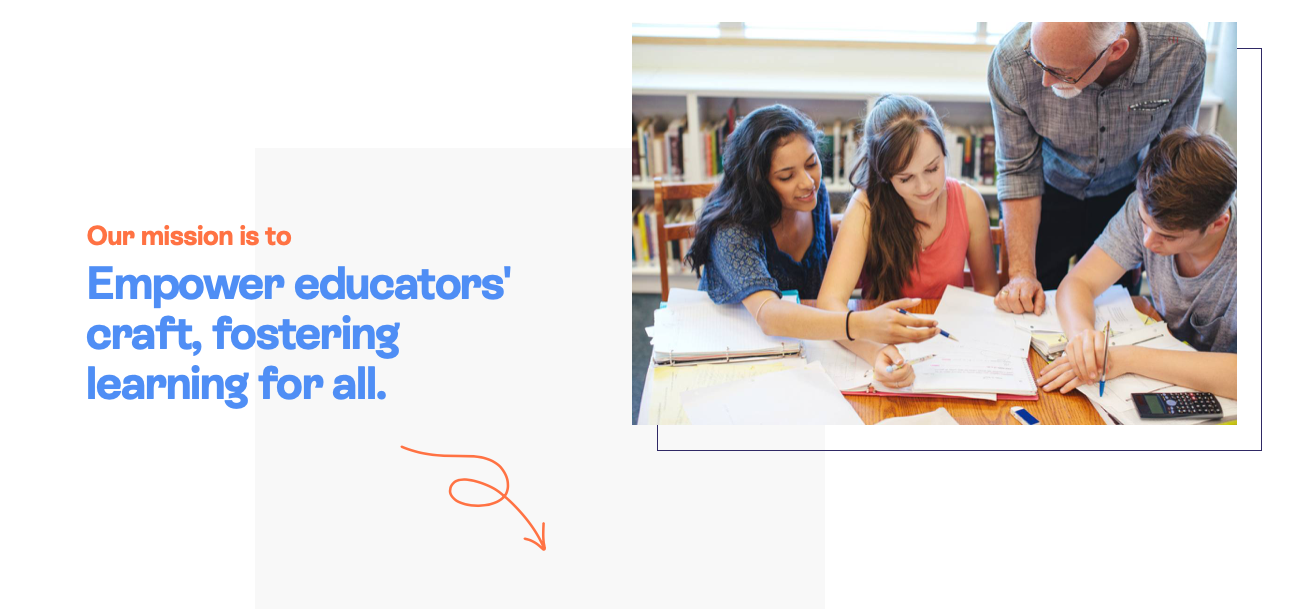
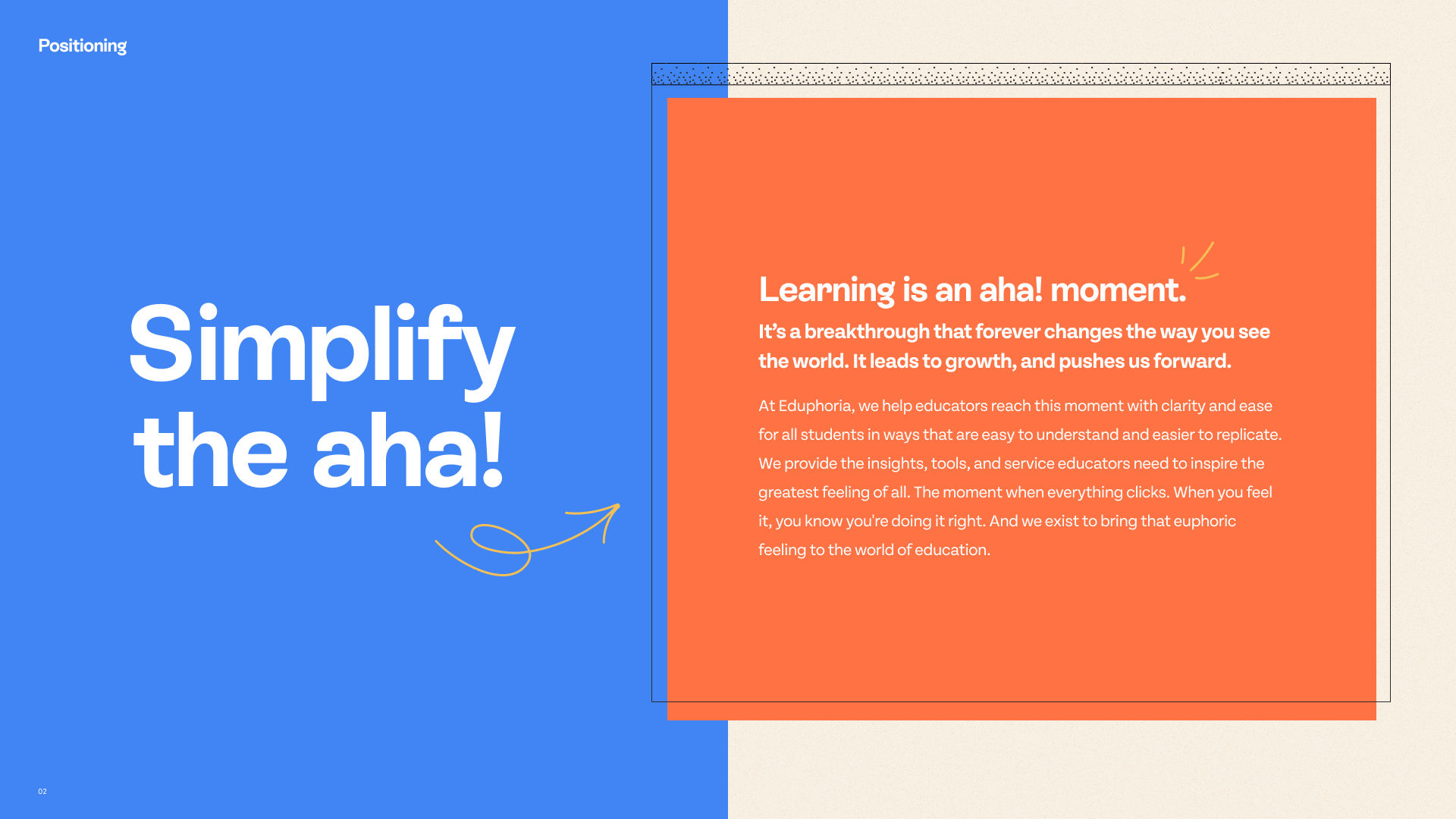
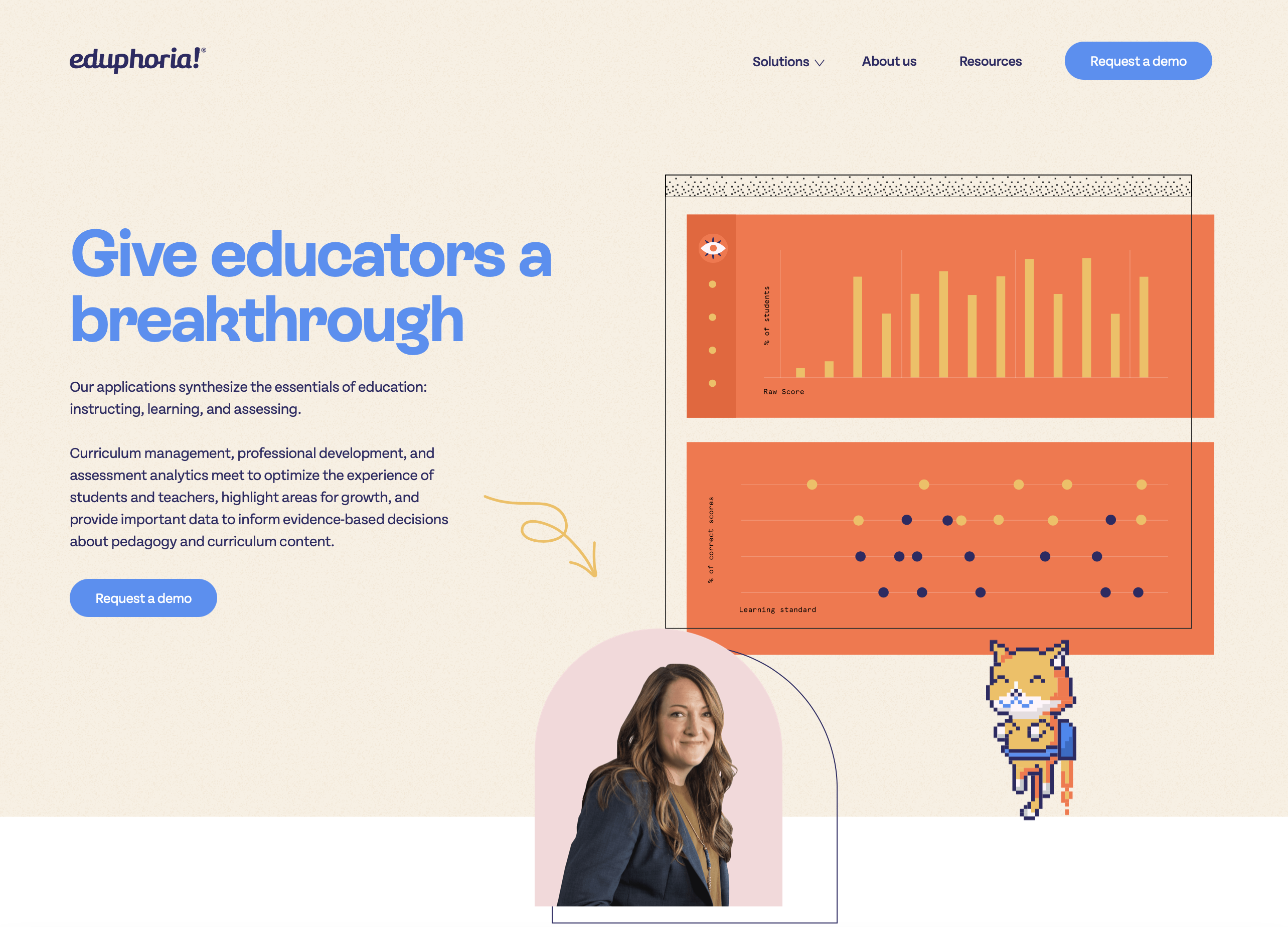
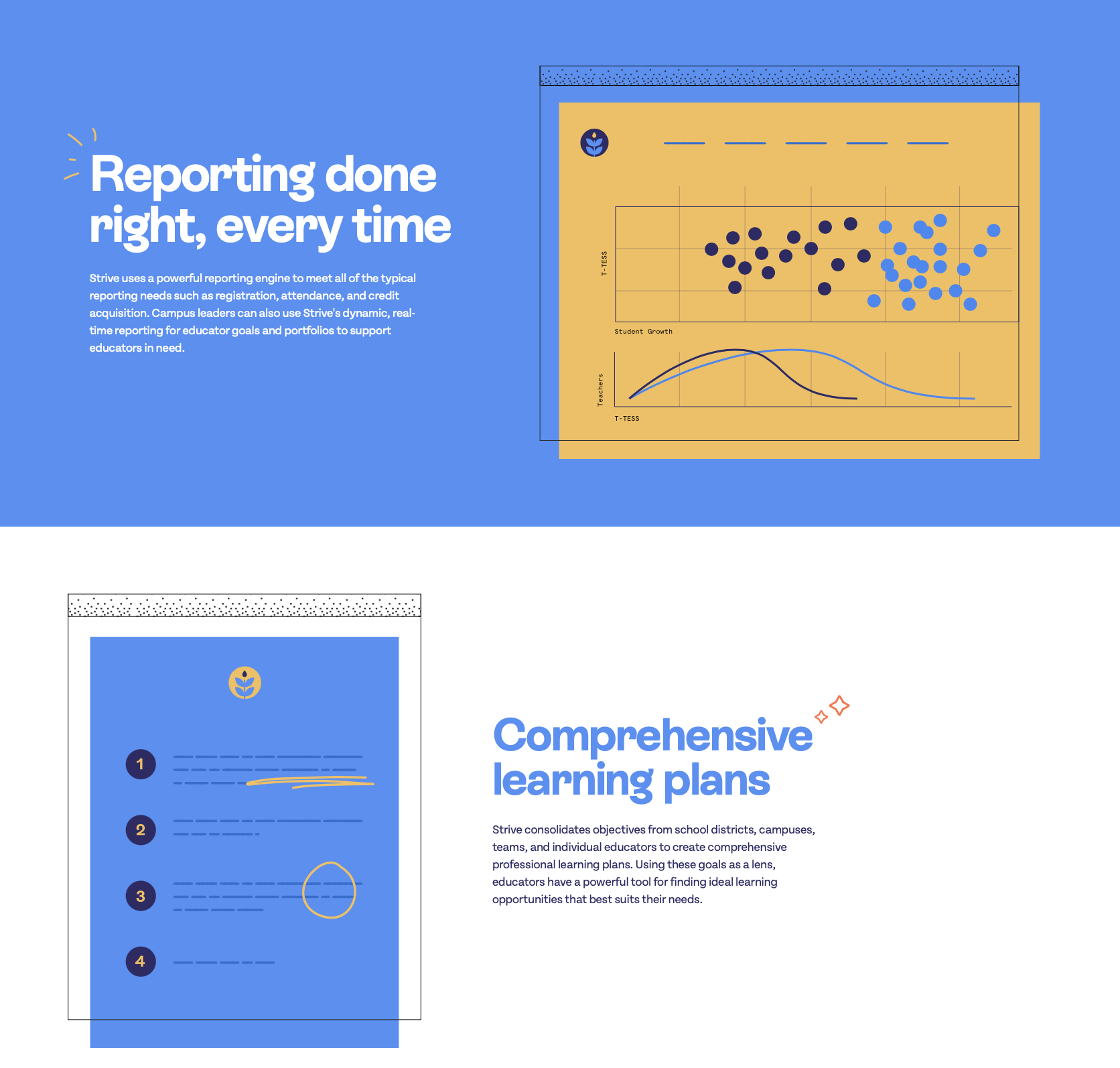
This time was spent mapping our Elements of Value, defining a mission statement & principles, and an overall positioning. This work progressed to deliver a new brand and design system.